End-to-End Encryption Explained: Messages, Metadata, Backup
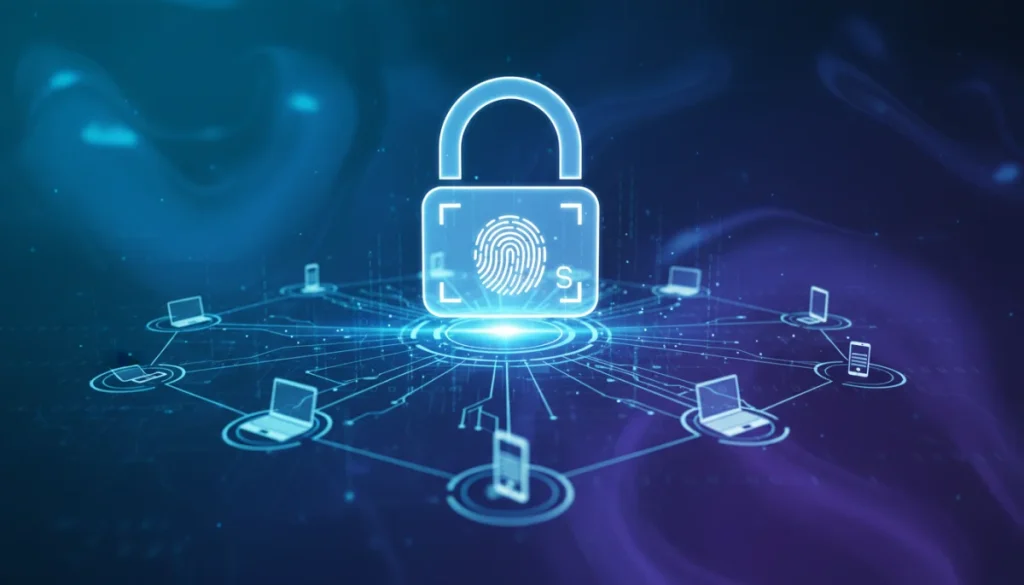
End-to-end encryption (E2EE) ensures only the sender and intended recipient can read messages, safeguarding communication from eavesdroppers, though metadata and backup practices can introduce vulnerabilities.
Understanding end-to-end encryption explained is crucial in today’s digital world. As our lives increasingly move online, ensuring the privacy of our conversations and data becomes paramount. This article will demystify how E2EE works, its implications for messages, the often-overlooked role of metadata, and the critical limitations concerning secure backups.
Understanding the Fundamentals of End-to-End Encryption
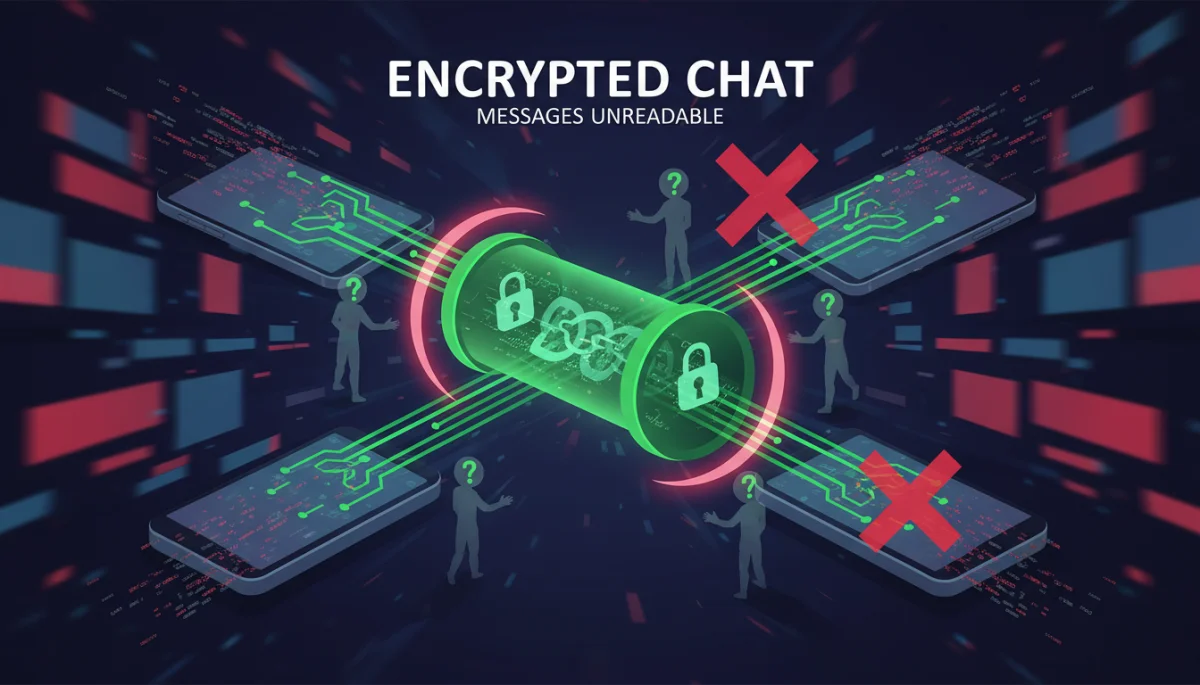
End-to-end encryption, or E2EE, is a system of communication where only the communicating users can read the messages. In principle, it prevents potential eavesdroppers – including telecom providers, internet providers, and even the service provider itself – from accessing the cryptographic keys needed to decipher the conversation. This means that once a message is sent, it’s encrypted on the sender’s device and remains encrypted until it reaches the recipient’s device, where it’s then decrypted. No one in between, not even the service hosting the communication, can read its contents.
This security model stands in stark contrast to other forms of encryption, such as transport layer security (TLS), which encrypts data only while it’s in transit between a user and a server. With TLS, the server can still access the unencrypted data, making it a potential point of vulnerability. E2EE, however, extends this protection all the way to the end-users, creating a more robust shield for private communications.
How E2EE Works: The Cryptographic Handshake
The magic behind E2EE lies in complex cryptographic protocols. When two parties initiate a conversation, their devices perform a “handshake” to securely exchange public keys and generate a shared secret key. This shared secret key is then used to encrypt and decrypt all subsequent messages within that conversation. Importantly, this shared secret key is never transmitted over the network and is known only to the communicating parties.
- Public and Private Keys: Each user has a pair of cryptographic keys: a public key that can be freely shared and a private key that must be kept secret.
- Key Exchange: During the handshake, public keys are exchanged, allowing each device to derive a shared secret key without ever directly sharing their private keys.
- Symmetric Encryption: Once the shared secret is established, a fast symmetric encryption algorithm is used to encrypt and decrypt messages, ensuring efficiency.
- Authentication: E2EE often includes mechanisms to verify the identity of the communicating parties, preventing man-in-the-middle attacks where an attacker might try to impersonate one of the users.
The strength of E2EE depends heavily on the robustness of these cryptographic algorithms and the secure implementation of the key exchange process. Any flaw in these areas could potentially undermine the entire security model. Therefore, reputable E2EE systems are often open-source and subjected to rigorous independent security audits.
In essence, E2EE provides a digital envelope that only the intended recipient can open, making it a cornerstone of modern digital privacy. It empowers individuals to communicate freely without fear of their messages being intercepted and read by unauthorized entities, fostering trust in digital interactions.
Messages Under End-to-End Encryption: What’s Truly Protected?
When an application claims to offer end-to-end encryption, it primarily guarantees the confidentiality of the message content itself. This includes text messages, voice calls, video calls, and shared files. The core promise is that if an unauthorized party intercepts your communication, they will only see an unreadable jumble of characters, not your actual conversation.
This level of protection is invaluable for personal privacy, business confidentiality, and even journalistic sources. It means that platforms like WhatsApp, Signal, or Telegram (in its secret chats) cannot, even if compelled by legal means, hand over the readable content of your messages to third parties, as they simply do not possess the keys to decrypt them.
The Scope of Content Protection
The scope of what E2EE protects within a message can vary slightly depending on the implementation, but generally covers:
- Text Messages: The actual words and emojis you type.
- Media Files: Photos, videos, and audio clips sent through the encrypted channel.
- Voice and Video Calls: The audio and video streams themselves are encrypted from one device to another.
- Documents: Files shared, such as PDFs or spreadsheets, are also protected.
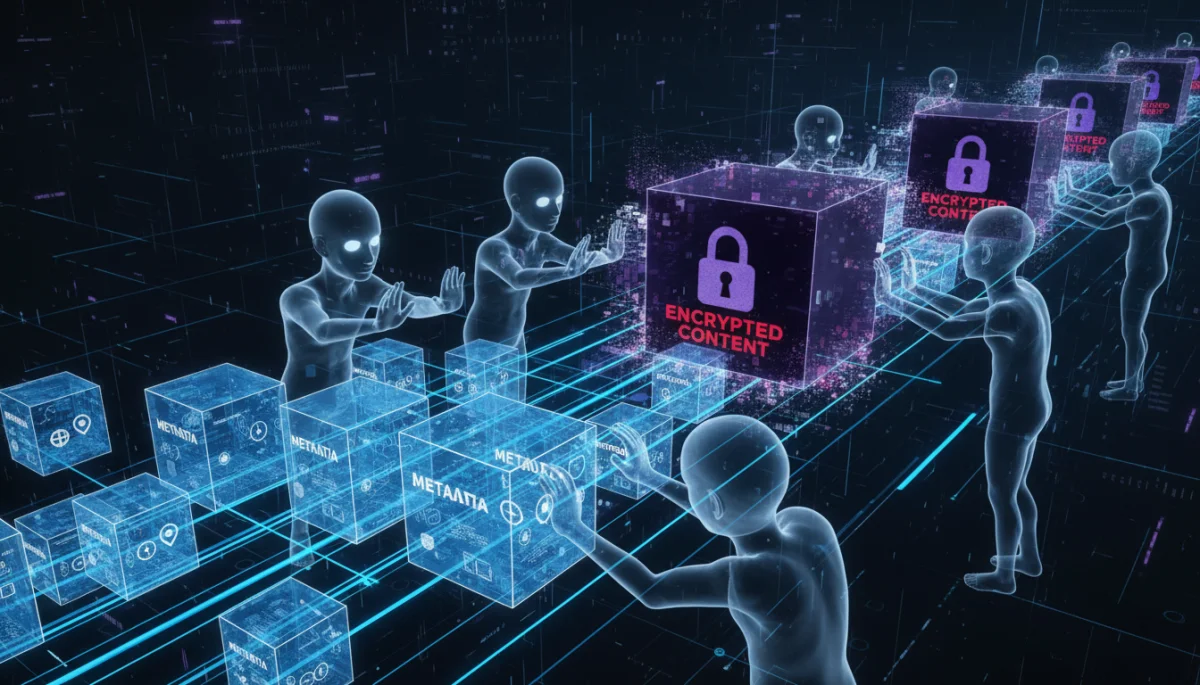
It’s important to differentiate between the content of the message and other associated information. While the message’s content is secured, the fact that a message was sent, when it was sent, and to whom, often falls outside the direct protection of E2EE. This distinction leads us to the critical topic of metadata.
The robust protection offered by E2EE for message content has transformed digital communication, making it a safer space for sensitive discussions. Users can have a higher degree of confidence that their private words remain private, free from the scrutiny of third-party entities. However, this confidence must be tempered with an understanding of where E2EE’s protection ends.
The Unseen Data: Understanding Metadata and Its Implications
While end-to-end encryption secures the content of your messages, it typically does not protect metadata. Metadata is “data about data” – information that describes the core content but isn’t the content itself. In the context of messaging, metadata can reveal a surprising amount about your communication patterns and potentially, your life.
For instance, when you send an E2EE message, the service provider still knows who sent the message, who received it, when it was sent, and sometimes even your approximate location. They might know the size of the message or the type of media attached. This information, even without the message content, can be highly valuable for surveillance, marketing, or other purposes.
What Metadata Reveals
Consider the following examples of metadata:
- Sender and Recipient: Who is communicating with whom.
- Timestamps: When messages were sent and received, indicating activity patterns.
- Frequency of Communication: How often you communicate with certain individuals, suggesting closeness or importance.
- Location Data: If location services are enabled, the approximate location from where a message was sent.
- Device Information: The type of device used, operating system, and app version.
Even without knowing what you said, knowing who you talk to, when, and from where can paint a detailed picture of your relationships, habits, and movements. For example, if a government agency or a malicious actor knows you frequently communicate with a specific individual at odd hours, it could raise suspicion, even if the content of your messages is inaccessible.
Some E2EE services are more proactive than others in minimizing metadata collection. Signal, for example, is renowned for its minimal metadata retention, often only logging the date an account was created and the last connection date. In contrast, other platforms might log more extensive metadata, making them less private despite offering E2EE for message content.
Therefore, when evaluating the true privacy of an E2EE service, it’s crucial to look beyond just the encryption of messages and consider its metadata policies. A truly private communication solution strives to minimize all forms of data collection, including metadata, to ensure comprehensive user protection.
The Challenge of Secure Backups with E2EE
One of the most significant complexities surrounding end-to-end encryption is the challenge of secure backups. While E2EE ensures your messages are private in transit and at rest on your device, the moment you back them up, especially to cloud services, you introduce a potential vulnerability that can undermine the entire security model.
Many popular messaging apps offer convenient cloud backup options, often integrating with services like Google Drive or iCloud. However, these backups are frequently not protected by the same E2EE standards as the live messages. This means that if your backup is stored unencrypted or with encryption keys accessible by the cloud provider, then the entire history of your supposedly secure conversations could be exposed.
Backup Vulnerabilities and Solutions
The primary issues with E2EE backups include:
- Cloud Provider Access: If backups are stored without E2EE on the cloud provider’s servers, the provider (and potentially law enforcement or hackers) could access your message history.
- Weak Encryption: Even if backups are encrypted, the keys might be managed by the cloud provider, making them a central point of failure.
- User Error: Users might inadvertently enable insecure backup options without realizing the privacy implications.
- Device Backups: Full device backups (e.g., via iTunes or other tools) might include app data, potentially exposing unencrypted message history if not properly secured.
To mitigate these risks, some E2EE services offer their own encrypted backup solutions. For instance, Signal allows users to create a local encrypted backup with a passphrase, ensuring that even if the backup file is compromised, its contents remain unreadable without the passphrase. Other services are exploring end-to-end encrypted cloud backups, where the encryption keys remain solely with the user.
The convenience of cloud backups often comes at the cost of security. Users must consciously choose between the ease of restoring their chat history and maintaining the highest level of privacy. Understanding these limitations is critical for making informed decisions about how you manage your digital communications.
E2EE in Practice: Popular Messaging Apps and Their Approaches
Different messaging applications implement end-to-end encryption with varying degrees of rigor and transparency. While many claim to offer E2EE, the devil is often in the details of their implementation, their handling of metadata, and their backup policies. A closer look at some popular apps reveals these differences.
WhatsApp, owned by Meta, uses the Signal Protocol for its E2EE, which is widely regarded as one of the strongest cryptographic protocols available. This means that message content on WhatsApp is, by default, end-to-end encrypted. However, WhatsApp’s extensive metadata collection and its default cloud backup options (which are not E2EE) present privacy considerations. Users must manually enable E2EE for their cloud backups on WhatsApp, a feature not always obvious.
Comparing E2EE Implementations
Here’s a brief comparison of how different apps approach E2EE:
- Signal: Widely considered the gold standard for privacy. All communications are E2EE by default, and the app is designed to collect minimal metadata. It offers local encrypted backups with a user-defined passphrase.
- WhatsApp: Uses the Signal Protocol for message content. Default cloud backups are not E2EE, though users can enable E2EE for Google Drive/iCloud backups. Collects more metadata than Signal.
- Telegram: Offers E2EE only for “Secret Chats.” Regular cloud chats are encrypted client-to-server, meaning Telegram can access them. Metadata collection is also more extensive than Signal.
- iMessage: Apple’s messaging service uses E2EE for messages between Apple devices. However, iCloud backups of iMessage chats are not E2EE by default, meaning Apple could potentially access them if iCloud backup is enabled and not secured with advanced data protection.
The choice of messaging app significantly impacts your overall privacy posture. Users seeking the highest level of security and privacy often gravitate towards apps like Signal, which prioritize E2EE and metadata minimization across the board. For other apps, a careful review of their privacy settings and an understanding of their default behaviors are essential.
Being informed about these distinctions allows users to make choices that align with their personal privacy requirements. It’s not enough for an app to simply state it uses E2EE; understanding the nuances of its implementation is key to truly secure communication.
Legal and Ethical Considerations of E2EE
The widespread adoption of end-to-end encryption has sparked intense debate among governments, law enforcement agencies, and privacy advocates worldwide. While E2EE is a powerful tool for protecting individual privacy and security, it also poses challenges for authorities attempting to combat crime and terrorism.
Governments often argue that E2EE creates “warrant-proof spaces” where criminals can communicate with impunity, hindering investigations. They advocate for “backdoors” or “exceptional access” mechanisms that would allow law enforcement to access encrypted communications under certain legal circumstances. However, privacy advocates and cybersecurity experts vehemently oppose such proposals, arguing that creating backdoors inherently weakens security for everyone, making systems vulnerable to exploitation by malicious actors.
The Encryption Debate: Backdoors vs. Privacy
The core arguments in this ongoing debate include:
- National Security vs. Individual Rights: Balancing the need for government surveillance capabilities against the fundamental right to privacy.
- Technical Feasibility: The technical difficulty, if not impossibility, of creating a backdoor that only ‘good guys’ can use. Once a vulnerability exists, it can be exploited by anyone.
- Global Implications: Laws mandating backdoors in one country could set a dangerous precedent globally, leading to a fragmented and less secure internet.
- Trust in Technology: Undermining E2EE would erode public trust in secure communication technologies, impacting everything from personal messaging to secure financial transactions.
The ethical implications extend to service providers as well. Companies offering E2EE services face the difficult decision of prioritizing user privacy or complying with government demands for access. This often leads to legal battles and public scrutiny, highlighting the complex interplay between technology, law, and human rights.
As technology evolves, the debate surrounding E2EE is likely to continue. It underscores the importance of a nuanced understanding of encryption’s capabilities and limitations, not just from a technical perspective, but also from a societal and ethical one. Finding a balance that protects both national security and individual privacy remains one of the most pressing challenges of the digital age.
Best Practices for Maximizing Your E2EE Privacy
Even with robust end-to-end encryption, users still play a crucial role in maintaining their digital privacy. A strong E2EE implementation can be undermined by poor user practices or overlooked settings. Adopting a few key habits can significantly enhance your security posture.
Firstly, always choose messaging applications that offer E2EE by default for all communications. While some apps provide it as an optional feature, making it the default ensures consistent protection without requiring constant vigilance. Signal is frequently cited as a prime example of an application built with privacy as its foundational principle, offering E2EE for all message types and calls by default.
Key Steps to Enhance Your Encrypted Privacy
To maximize your E2EE privacy, consider these best practices:
- Choose Privacy-Focused Apps: Opt for apps like Signal that are open-source, regularly audited, and prioritize user privacy and minimal metadata collection.
- Verify Security Codes: When initiating a new E2EE conversation, verify the security codes (or safety numbers) with your contact in person or over a trusted channel. This prevents potential man-in-the-middle attacks.
- Disable Cloud Backups (or Encrypt Them): Be extremely cautious with cloud backups. If an app offers E2EE cloud backups, ensure they are enabled and secured with a strong, unique passphrase. Otherwise, consider disabling them entirely and using local encrypted backups.
- Manage Metadata: Be aware of what metadata your chosen app collects. Minimize location sharing and review app permissions regularly.
- Use Strong Passwords/Passphrases: Secure your devices with strong passcodes and use unique, complex passphrases for any encrypted backups.
- Keep Software Updated: Ensure your operating system and messaging applications are always updated to the latest versions to benefit from the newest security patches.
Your digital privacy is a shared responsibility between technology providers and users. While E2EE provides a strong technical foundation, informed decisions and diligent practices on your part are essential to fully leverage its benefits. By understanding the nuances of E2EE, metadata, and backup limitations, you can navigate the digital landscape with greater confidence and control over your personal information.
| Key Aspect | Description |
|---|---|
| E2EE Core | Encrypts message content from sender to recipient, preventing third-party access. |
| Metadata Risks | E2EE doesn’t protect data like sender, recipient, time, and frequency of communication. |
| Backup Limitations | Cloud backups often lack E2EE, creating a vulnerability for message history. |
| User Responsibility | Choosing privacy-focused apps and managing settings are crucial for full E2EE benefits. |
Frequently Asked Questions About End-to-End Encryption
E2EE is a security method ensuring that only the sender and intended recipient can read a message. It encrypts data on the sender’s device and decrypts it only on the recipient’s device, preventing intermediaries, including the service provider, from accessing the content.
Typically, no. While E2EE secures message content, metadata—like who you communicate with, when, and from where—is often visible to the service provider. Some privacy-focused apps minimize metadata collection, but it’s rarely fully protected by E2EE.
Not always. Many cloud backup services (like Google Drive or iCloud) do not apply E2EE by default to messaging app backups. This can expose your message history. Some apps now offer optional E2EE for cloud backups, requiring a user-managed key.
E2EE is crucial because it ensures your private conversations remain confidential, free from surveillance by corporations, governments, or malicious actors. It safeguards sensitive personal, financial, and professional information, fostering trust and security in digital communication.
To maximize privacy, use apps known for strong E2EE and minimal metadata collection (e.g., Signal). Always verify security codes, disable unencrypted cloud backups, or enable E2EE for them. Keep your software updated and use strong device passcodes.
Conclusion
End-to-end encryption explained reveals a powerful tool for digital privacy, securing the content of our messages from prying eyes. However, true digital security is a layered concept. While E2EE excels at protecting the substance of our communications, users must remain vigilant about metadata exposure and the inherent limitations of backup solutions. By understanding these nuances and adopting best practices—such as choosing privacy-focused applications, managing backup settings carefully, and staying informed about app policies—individuals can significantly enhance their control over their digital footprint. Ultimately, E2EE provides a robust foundation, but comprehensive privacy in the digital age requires informed user choices and continuous awareness.
