Disappearing Messages Explained: What They Do & Don’t Protect
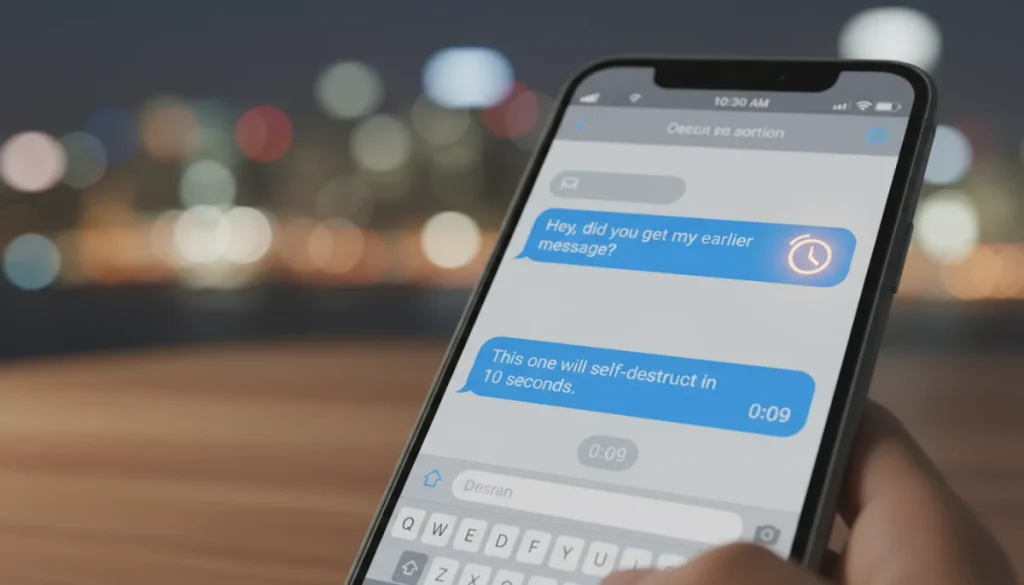
Disappearing messages automatically remove content after a set time, enhancing privacy by reducing digital footprints, but they do not prevent recipients from manually saving or recording information before deletion.
In an increasingly digital world, privacy and data security are paramount concerns for many. This is where the concept of disappearing messages explained comes into play, promising a new layer of control over our conversations. But what exactly are these messages, how do they work, and what can they truly protect us from? Let’s dive in and demystify this popular feature in modern messaging applications.
Understanding the Core Concept of Disappearing Messages
Disappearing messages, often referred to as ephemeral messaging, are designed to self-destruct or automatically delete after a specified period. This feature is integrated into many popular messaging platforms, aiming to give users greater control over the longevity of their digital communications. The underlying idea is to mimic real-life conversations where words spoken vanish into thin air, leaving no permanent record.
The primary appeal of this technology lies in its perceived ability to enhance privacy. By setting a timer for messages to disappear, users can feel more secure knowing that their sensitive information, casual remarks, or temporary plans won’t reside indefinitely on servers or recipient devices. This can be particularly appealing in professional contexts or when discussing personal matters.
How the Self-Destruct Mechanism Works
When you enable disappearing messages in an app, you typically set a timer—ranging from a few seconds to several days or even weeks. Once this timer expires, the message is automatically removed from both the sender’s and recipient’s devices, and often from the service provider’s servers as well. The exact implementation can vary significantly between different applications.
- Client-side deletion: Messages are removed from the device interface, but might still exist on servers.
- Server-side deletion: Messages are purged from the service provider’s servers, offering stronger privacy.
- End-to-end encryption integration: Combined with encryption, this provides a robust privacy solution.
The self-destruct mechanism is a powerful tool for managing digital footprints. It reduces the risk of old conversations being accessed by unauthorized parties or used out of context at a later date. This proactive approach to data management is a key differentiator from traditional messaging, where every word can be archived indefinitely.
In essence, disappearing messages offer a digital equivalent of a whispered secret, intended to be heard and then forgotten. However, the technicalities behind this simple concept are crucial for understanding its true protective capabilities and, more importantly, its limitations.
The Privacy Benefits: What Disappearing Messages Can Protect
The promise of enhanced privacy is the driving force behind the adoption of disappearing messages. When used correctly, they can indeed offer several significant benefits for safeguarding your digital communications. These advantages primarily revolve around reducing the persistent nature of online data.
One of the most immediate benefits is the reduction of your digital footprint. Every message, image, or video sent typically remains on servers and devices for an indefinite period. Disappearing messages actively work against this, ensuring that ephemeral content truly remains ephemeral. This minimizes the amount of personal data that could potentially be exposed in a data breach or accessed by third parties.
Minimizing Data Retention and Exposure
By automatically deleting content, these features drastically cut down on data retention. This is particularly useful for sensitive discussions that don’t need a permanent record. For instance, sharing a one-time password, a temporary address, or a confidential detail for a limited period can be made safer with disappearing messages.
- Reduced risk of accidental exposure: Less data stored means less to lose if a device is compromised.
- Protection against future data breaches: Old messages won’t be part of a server hack if they’ve already been deleted.
- Enhanced personal control: Users dictate how long their messages exist, aligning with their privacy preferences.
Furthermore, disappearing messages can protect against casual snooping. If someone gains temporary access to your device, or if a recipient’s device falls into the wrong hands, the absence of old conversations means less information is available for them to discover. This adds a layer of protection that passive encryption alone cannot provide, as encryption only secures data in transit and at rest, not its continued existence.
Ultimately, the main strength of disappearing messages lies in their ability to enforce a time limit on communication. This makes them an invaluable tool for conversations where the context is fleeting, and the content is not intended for long-term storage or scrutiny.
Crucial Limitations: What They Cannot Protect Against
While disappearing messages offer compelling privacy benefits, it is critical to understand their inherent limitations. The perception that these messages provide absolute, foolproof protection can be misleading, and users should be aware of what they cannot safeguard against. This awareness is essential for making informed decisions about digital communication.
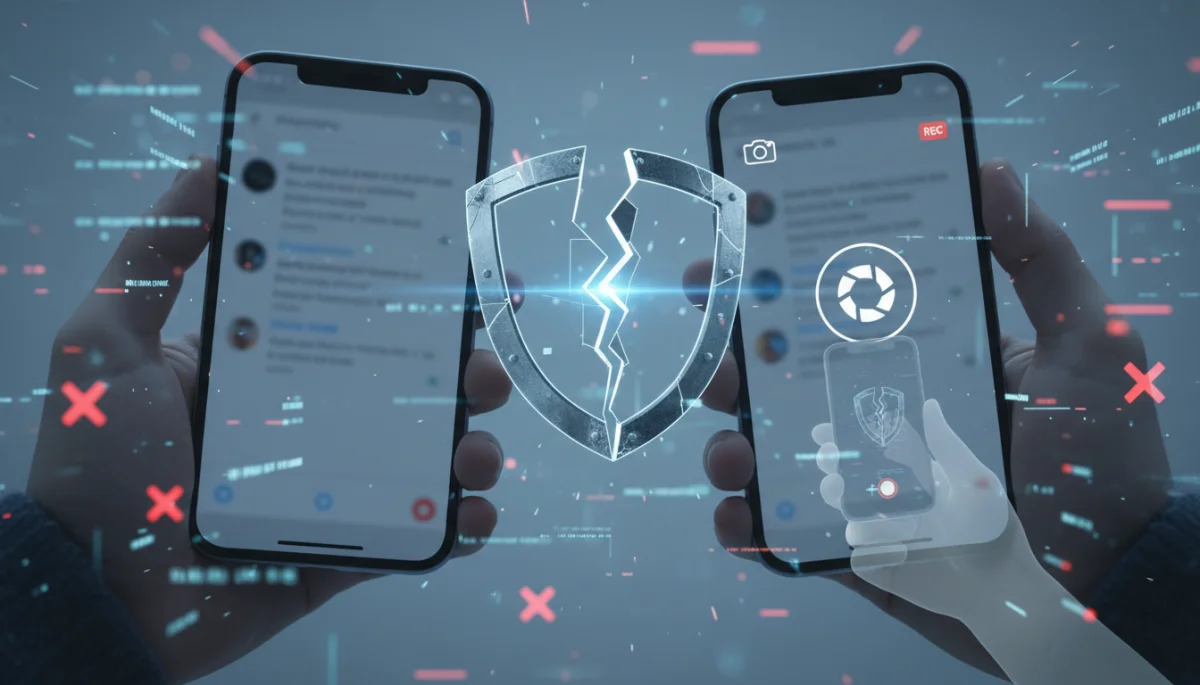
The most significant limitation is the human element. Disappearing messages cannot prevent a recipient from manually capturing the content before it vanishes. A recipient can easily take a screenshot, snap a photo with another device, or simply transcribe the message. Once the information leaves the sender’s control and reaches the recipient’s device, its ultimate fate is largely in the recipient’s hands.
The Reality of Screenshots and External Recordings
Many messaging apps attempt to notify senders when a screenshot is taken, but these notifications are not universal and can often be circumvented. Moreover, taking a photo or video of a screen with a second device leaves no digital trace within the app itself. This means that sensitive information can still be permanently recorded and shared, despite the ephemeral setting.
- Screenshots: Easily captured by recipients, even with notifications in some apps.
- Physical recordings: A second device can record messages without any digital footprint.
- Memory and transcription: Recipients can simply remember or write down the message content.
Another limitation is the potential for technical vulnerabilities or bugs. While apps strive for perfection, no software is entirely immune to flaws. A bug could theoretically prevent a message from disappearing as intended, or allow it to be recovered from a device’s temporary memory. Such instances, while rare, highlight that even the most robust systems are not infallible.

Therefore, while disappearing messages significantly reduce the digital footprint and mitigate certain risks, they do not offer a complete shield against all forms of data capture or misuse. Users should always consider the trustworthiness of their communication partners, regardless of the message settings.
Different Implementations Across Messaging Platforms
The way disappearing messages are implemented varies considerably from one messaging platform to another. Understanding these differences is crucial for users to fully grasp the level of privacy and security they are actually receiving. Not all disappearing message features are created equal, and their effectiveness can depend heavily on the app’s overall architecture and design.
For example, some apps delete messages only from the user’s device, while others ensure they are purged from both sender and receiver devices, and even from the service provider’s servers. The latter offers a more comprehensive approach to ephemerality, as it removes the message from multiple points in the communication chain. This server-side deletion is a key indicator of a more robust disappearing message feature.
Variations in Deletion Timers and Notifications
Platforms also differ in the flexibility of their deletion timers. Some offer a wide range of options, from a few seconds to a week, allowing users to tailor the ephemerality to their specific needs. Others might have fixed, less granular options. Furthermore, the presence or absence of screenshot notifications plays a significant role in managing expectations about message persistence.
- WhatsApp: Offers various timers and supports disappearing messages for both individual and group chats.
- Signal: Known for its strong privacy, Signal provides flexible timers and emphasizes end-to-end encryption.
- Telegram: Features ‘Secret Chats’ with self-destruct timers and screenshot prevention (though not foolproof).
- Snapchat: Pioneered ephemeral messaging, with content designed to be viewed once and then disappear, though saving options exist.
The integration with end-to-end encryption is another critical factor. When disappearing messages are combined with strong end-to-end encryption, it ensures that even if messages are intercepted while in transit, they are unreadable to unauthorized parties. The deletion then further guarantees that the encrypted data does not persist beyond its intended lifespan.
Users should always review the specific privacy policies and features of each messaging app they use. A feature labeled ‘disappearing messages’ might have different underlying mechanics and protective capabilities depending on the platform, making informed choice paramount.
Best Practices for Using Disappearing Messages Effectively
To truly leverage the privacy benefits of disappearing messages, it’s not enough to simply enable the feature; users must also adopt best practices. Understanding how to use these tools effectively can significantly enhance your digital security, even within their inherent limitations.
The first and most crucial practice is to communicate with trusted individuals. While disappearing messages can reduce the risk of accidental exposure, they cannot prevent a malicious or careless recipient from capturing and misusing information. Therefore, only share sensitive information with people you genuinely trust, regardless of the app’s features.
Combining Ephemeral Messaging with Other Security Measures
Disappearing messages should be viewed as one component of a broader digital security strategy, not a standalone solution. Combining them with other security measures can create a more robust defense against various threats. This holistic approach ensures that multiple layers of protection are in place.
- Use strong, unique passwords: Protect your device and accounts with robust authentication.
- Enable two-factor authentication (2FA): Add an extra layer of security to your messaging apps.
- Keep software updated: Ensure your operating system and apps have the latest security patches.
- Be wary of phishing attempts: Never click on suspicious links or download unknown attachments.
Always consider the context of your conversation. For highly sensitive information, even with disappearing messages, it might be safer to communicate offline or through more secure, purpose-built channels. For everyday conversations where you want to minimize your digital footprint, disappearing messages are an excellent choice.
Educating your communication partners about how disappearing messages work is also beneficial. Ensure they understand the implications of the feature, including what it does and doesn’t protect, to foster a shared understanding of privacy in your interactions.
The Future of Ephemeral Communication and Digital Privacy
The evolution of disappearing messages is a clear indicator of a growing societal demand for greater digital privacy and control over personal data. As technology advances and privacy concerns continue to mount, ephemeral communication features are likely to become even more sophisticated and integrated into our daily digital lives. The future holds promises of more robust protections and innovative solutions.
We can anticipate advancements in technology that make screenshot detection more reliable or even prevent it entirely within certain contexts, though this remains a significant technical challenge. Furthermore, the integration of disappearing messages with other privacy-enhancing technologies, such as decentralized messaging protocols, could offer even stronger guarantees of data ephemerality and user anonymity.
Emerging Trends and User Expectations
As users become more aware of their digital rights and the value of their personal data, the expectation for privacy-by-design features will only increase. Disappearing messages are at the forefront of this trend, pushing developers to innovate and provide tools that empower users to manage their digital presence more effectively. This shift is driving a competitive landscape among messaging apps, with privacy becoming a key differentiator.
- Enhanced AI for content analysis: Detecting and flagging attempts to bypass ephemerality.
- Decentralized architecture: Reducing reliance on central servers for message storage.
- Legal and regulatory frameworks: Adapting to support and define ephemeral communication.
The ongoing discourse around data privacy, government surveillance, and corporate data collection will undoubtedly shape the development of ephemeral communication. As regulatory bodies like the GDPR and CCPA set new standards for data protection, messaging apps will continue to adapt, offering features that comply with and exceed these requirements.
Ultimately, the future of ephemeral communication points towards a more nuanced understanding of digital permanence. Disappearing messages are not a panacea, but they represent a significant step forward in giving individuals more control over their conversational data, fostering a more privacy-conscious digital environment for everyone.
| Key Aspect | Description |
|---|---|
| Core Function | Messages automatically delete after a set time, reducing digital footprint. |
| Privacy Benefits | Minimizes data retention, reduces exposure to breaches, enhances user control. |
| Key Limitations | Cannot prevent screenshots, external recordings, or recipient memory/transcription. |
| Best Practices | Combine with trusted contacts, strong passwords, 2FA, and software updates. |
Frequently Asked Questions About Disappearing Messages
Disappearing messages are a feature in messaging apps that automatically delete texts, photos, and videos after a set time. They are designed to enhance privacy by ensuring that conversations do not remain permanently stored on devices or servers, reducing your digital footprint and potential exposure.
No, disappearing messages generally do not fully prevent screenshots. While some apps may notify the sender if a screenshot is taken, this feature is not universal and can often be bypassed. A recipient can also use another device to photograph the screen, leaving no digital trace.
Disappearing messages enhance security by limiting data retention, especially when combined with end-to-end encryption. However, they are not foolproof. They cannot prevent a recipient from manually capturing or remembering information, or from sharing it outside the app’s controls. Trust in your recipient remains key.
Once a disappearing message is truly deleted by the app’s mechanism, it is generally not recoverable by the user or from the app’s servers. However, technical glitches or specific device backups could, in rare cases, retain some data. Always assume that once sent, information could potentially persist.
Conclusion
Disappearing messages represent a significant step forward in empowering users with greater control over their digital privacy. By automatically removing content after a set period, they effectively reduce digital footprints and mitigate risks associated with long-term data retention. However, it is crucial for users to approach this feature with a clear understanding of its capabilities and, more importantly, its limitations. While they can protect against accidental exposure and server-side data breaches, they cannot prevent a determined recipient from capturing information through screenshots or external recordings. Integrating disappearing messages into a broader personal security strategy, alongside trusted communication and robust digital hygiene, is the most effective way to leverage their benefits while remaining aware of their boundaries in the evolving landscape of digital communication.
