Free vs. Paid Communication Apps: Features & Costs Explored
Choosing between free and paid communication apps involves weighing feature sets, privacy, security, and recurring costs against your specific communication needs and budget.
In today’s hyper-connected world, communication apps are indispensable tools for staying in touch with friends, family, and colleagues. However, the sheer volume of options can be overwhelming, especially when trying to discern the true value proposition of free versus paid communication apps: comparing useful features and recurring costs. This deep dive will help you navigate the complex landscape of digital communication, empowering you to make an informed decision that aligns with your priorities, whether they be cost-efficiency, advanced features, robust security, or enhanced privacy.
Understanding the Free App Model: Convenience at a Cost?
Free communication apps have revolutionized how we interact, offering instant messaging, voice calls, and video conferencing at no direct monetary expense. Their widespread adoption is undeniable, driven by accessibility and the ease of connecting with a global network. However, it’s crucial to understand that ‘free’ often comes with an implicit cost, usually in the form of data collection, advertising, or limitations on advanced functionalities.
The Revenue Streams of Free Apps
Many free apps sustain themselves through various indirect monetization strategies. These can range from displaying advertisements within the app interface to leveraging user data for targeted marketing. While this model allows for broad accessibility, it raises important questions about user privacy and the true value exchange.
- Advertising: In-app ads are a common sight, funding development and operations.
- Data Monetization: User data, often anonymized, can be aggregated and sold to third parties for market research or personalized ad delivery.
- Freemium Models: Offering basic features for free while charging for premium upgrades or additional functionalities.
Another aspect to consider is the potential for a less polished user experience. Free apps might have more bugs, slower customer support, or less frequent updates compared to their paid counterparts, primarily due to budgetary constraints. The focus is often on scale and rapid user acquisition, sometimes at the expense of meticulous development and ongoing maintenance.
Privacy and Security Concerns
While many free apps claim strong encryption and privacy policies, their business models can inherently create vulnerabilities. The need to collect data for advertising or analytics can sometimes clash with a user’s desire for absolute privacy. It’s essential to scrutinize the privacy policy of any free app you use to understand what data is being collected, how it’s used, and with whom it might be shared.
In conclusion, free apps offer unparalleled convenience and widespread connectivity. They are an excellent choice for casual communication where advanced features and absolute privacy are not paramount. However, users should be aware of the underlying business models and potential trade-offs regarding data privacy and the overall user experience.
The Value Proposition of Paid Communication Apps: Premium Experience
Paid communication apps, conversely, operate on a direct subscription or one-time purchase model, promising an enhanced user experience, advanced features, and often, a stronger commitment to user privacy and data security. This direct financial exchange allows developers to focus on product quality and user satisfaction rather than relying on indirect monetization methods.
Key Advantages of Paid Apps
The primary draw of paid apps lies in their ability to deliver a superior service without the compromises often associated with free alternatives. This includes an ad-free environment, which contributes significantly to a smoother and more focused communication experience.
- Ad-Free Experience: No interruptions from advertisements, leading to a cleaner interface and less distraction.
- Enhanced Features: Access to advanced functionalities like higher quality video conferencing, larger file sharing limits, group collaboration tools, and custom integrations.
- Prioritized Support: Subscribers often receive faster and more dedicated customer support, resolving issues more efficiently.
Beyond the feature set, paid apps frequently invest heavily in research and development, leading to more innovative tools and a more stable platform. The financial backing from subscriptions enables a continuous cycle of improvement, bug fixes, and the introduction of cutting-edge technologies that keep the app competitive and relevant.
Robust Privacy and Security Measures
One of the most compelling arguments for paid communication apps is their often-superior approach to privacy and security. Without the need to monetize user data, these apps can prioritize end-to-end encryption, zero-knowledge architecture, and transparent data handling practices. This offers users greater peace of mind regarding the confidentiality of their conversations and personal information.
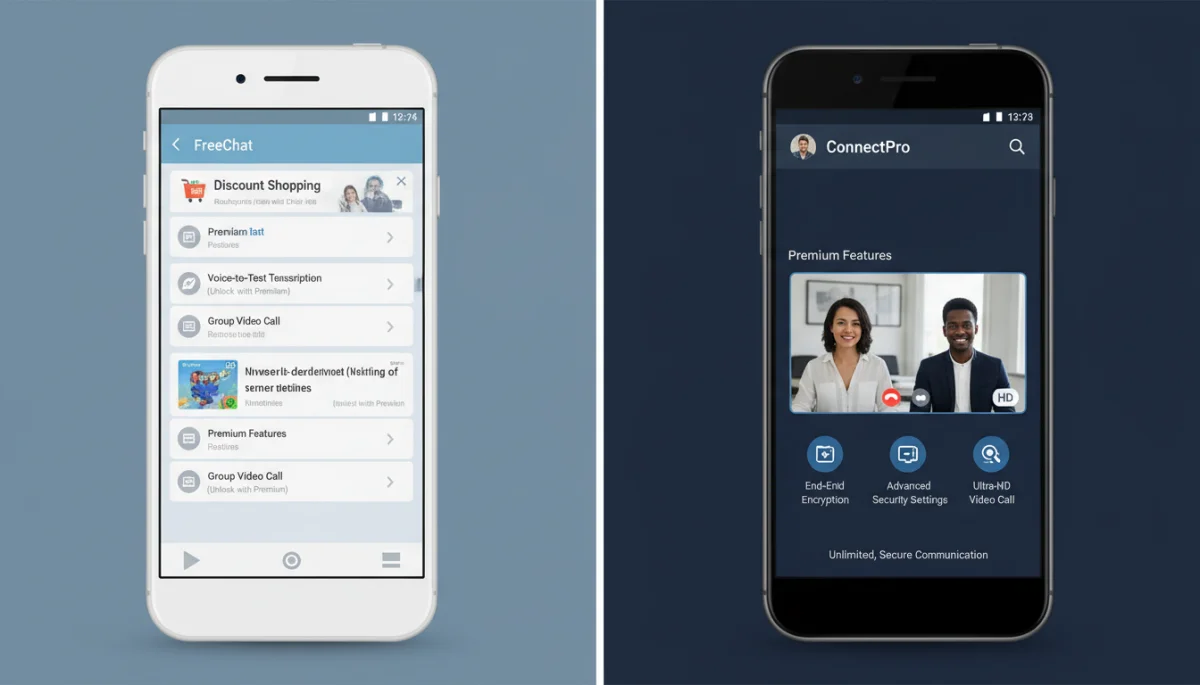
Many paid services explicitly state that they do not sell user data, nor do they track user behavior for advertising purposes. This commitment to privacy is often a cornerstone of their brand identity and a key differentiator in a crowded market. For individuals or businesses handling sensitive information, this level of assurance is invaluable.
In essence, paid communication apps offer a premium experience where the user is the customer, not the product. This model often translates into higher quality, more secure, and feature-rich communication tools, making them a strong consideration for those who prioritize performance and privacy.
Feature Comparison: What Do You Really Need?
When comparing free versus paid communication apps: comparing useful features and recurring costs, a detailed look at specific functionalities is essential. Both categories offer a baseline of messaging and calling, but the depth and quality of these features, along with additional tools, can vary dramatically.
Core Communication Features
Most free apps provide reliable text messaging, voice calls, and basic video calls. Apps like WhatsApp, Telegram, and Messenger excel in these areas, offering group chats, media sharing, and emoji reactions. These are more than sufficient for everyday personal use and casual interactions.
- Text Messaging: Standard across both, but paid apps might offer richer formatting or self-destructing messages.
- Voice and Video Calls: Quality can vary. Paid apps often guarantee higher resolution and stability, especially for group calls.
- Media Sharing: Free apps usually have file size limits; paid apps often offer significantly larger capacities.
Paid apps, on the other hand, often elevate these core features. For instance, they might offer higher definition video calls, support for a greater number of participants in group calls, or advanced screen-sharing capabilities ideal for professional settings. The stability and reliability of these features can also be superior, minimizing dropped calls or glitches.
Advanced Functionalities and Integrations
This is where paid apps typically shine, catering to specific needs that go beyond basic communication. Features like project management integrations, advanced analytics, custom branding, and dedicated administrative controls are common in paid platforms, making them indispensable for businesses and organizations.
Consider a team collaborating remotely. A paid app might offer integrated task management, shared whiteboards, and seamless integration with other business software (CRM, project management tools). Free apps rarely offer this level of integration or specialized functionality, requiring users to switch between multiple applications, which can hinder productivity.
Ultimately, the decision hinges on your specific requirements. For simple, personal interactions, free apps are often perfectly adequate. However, for professional use, high-stakes communication, or a desire for a truly comprehensive and integrated communication suite, the advanced features offered by paid apps often justify the recurring costs.
The Recurring Costs: Beyond the Sticker Price
Understanding the financial implications is central to comparing free versus paid communication apps: comparing useful features and recurring costs. While paid apps have an obvious subscription fee, free apps can also incur hidden costs that users might not immediately recognize.
Direct and Indirect Costs of Free Apps
The most apparent indirect cost of free apps is often your data and attention. The time spent viewing ads or the potential exposure of your personal data to third parties can be considered a form of payment. Furthermore, some ‘free’ apps employ a freemium model, enticing users with basic features and then charging for upgrades that become essential over time.
- Data Usage: Free apps might consume more data due to ads or less efficient compression algorithms.
- Time: Interruptions from ads can impact productivity and overall user experience.
- Privacy Risk: The potential for data breaches or misuse of personal information carries a significant, albeit intangible, cost.
It’s also worth noting that some free apps might offer in-app purchases for stickers, themes, or other cosmetic enhancements, turning a seemingly free experience into a series of micro-transactions. These can add up over time, sometimes surpassing the cost of a paid subscription.
Subscription Models and Value for Money in Paid Apps
Paid apps typically offer clear, transparent subscription models, often with monthly or annual billing. These costs directly fund development, maintenance, and customer support, ensuring a high-quality service. The value for money in paid apps often comes from the absence of ads, superior features, enhanced security, and dedicated support.
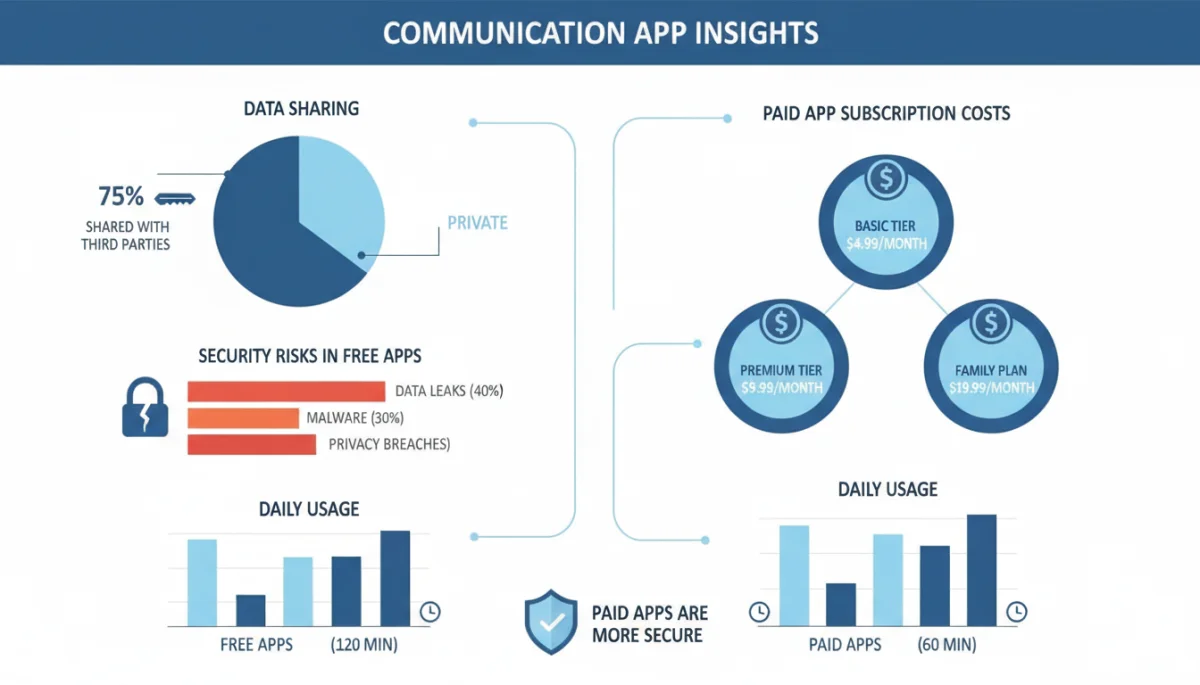
When evaluating a paid app, consider the total cost of ownership over a year. Compare the subscription fee against the benefits received, such as increased productivity, reduced security risks, and access to unique tools. For businesses, the cost can often be justified by improved team collaboration, client communication, and data protection.
In conclusion, while free apps appear to have no financial cost, they often come with hidden trade-offs. Paid apps, despite their direct fees, can offer a more predictable and value-rich experience, especially when considering the long-term benefits of privacy, security, and advanced features.
Privacy and Security: A Non-Negotiable Aspect
In an era where data breaches and privacy concerns are rampant, the privacy and security features of communication apps have become paramount. This is a critical distinction when evaluating free versus paid communication apps: comparing useful features and recurring costs.
How Free Apps Handle Your Data
Many free apps, particularly those relying on advertising, engage in data collection to some degree. This can include metadata (who you communicate with, when, and how often), device information, and even, in some cases, content analysis for ad targeting. While often anonymized and aggregated, the sheer volume of data collected raises legitimate privacy concerns.
- End-to-End Encryption (E2EE): While many free apps offer E2EE for messages, its implementation and scope can vary.
- Data Retention Policies: How long is your data stored, and under what conditions can it be accessed by third parties or governments?
- Third-Party Sharing: How much of your data is shared with advertisers, analytics firms, or other partners?
The business model of free apps often necessitates a compromise on privacy. Users must carefully read and understand the privacy policies, which can be complex and difficult to interpret, to fully grasp what they are consenting to when using these services. Ignorance of these policies can lead to unexpected exposure of personal information.
The Privacy Advantage of Paid Apps
Paid communication apps generally have a stronger incentive to protect user privacy because their revenue model is based on direct user subscriptions, not data monetization. This often translates into more robust security measures and transparent privacy practices.
Many paid apps boast features like zero-knowledge encryption, where even the service provider cannot access the content of your communications. They often have stricter data retention policies, clearer terms of service regarding data access, and a commitment to not selling or sharing user data with third parties for advertising purposes. For sensitive conversations, confidential business dealings, or simply a desire for personal solitude, paid apps offer a significantly higher degree of assurance.
Ultimately, your choice in communication apps should heavily weigh their privacy and security postures. If your communications involve sensitive personal or professional information, investing in a paid app with a proven track record of data protection is a wise decision. For casual conversations, a free app might suffice, but always proceed with caution and awareness of their data handling practices.
Making the Right Choice: Tailoring to Your Needs
The decision between free versus paid communication apps: comparing useful features and recurring costs isn’t a one-size-fits-all answer. It’s about aligning the app’s capabilities and costs with your specific communication habits, privacy requirements, and budget.
Assessing Your Communication Habits
Start by evaluating how you primarily use communication apps. Are you mostly sending casual messages to friends and family, or do you rely on them for professional collaboration, client meetings, or sharing sensitive documents? Your usage patterns will heavily influence whether a free or paid solution is more appropriate.
- Casual User: Free apps like WhatsApp or Messenger are often sufficient for daily chats, quick calls, and sharing photos with a broad network.
- Professional User: Paid apps such as Slack, Microsoft Teams (with premium features), or dedicated secure messengers offer collaboration tools, higher security, and better integration with business workflows.
- Privacy-Conscious User: Apps prioritizing strong encryption and no data logging, whether free (like Signal) or paid, should be at the top of your list.
Consider the types of media you share, the size of your groups, and the frequency of your calls. If you frequently participate in large video conferences or need to send large files, a paid app with higher limits and better quality might be a necessity rather than a luxury.
Budgetary Considerations and Long-Term Value
While the immediate appeal of ‘free’ is strong, it’s crucial to look beyond the initial cost. As discussed, free apps often have indirect costs related to privacy, ads, or feature limitations that might compel you to seek alternatives or upgrades later. Paid apps, with their upfront or recurring fees, offer a predictable expense for a guaranteed level of service.
For individuals, a monthly subscription to a premium communication app might be a minor expense, especially if it enhances productivity or peace of mind. For businesses, the investment in a robust communication platform can yield significant returns in terms of efficiency, security, and team cohesion. Always weigh the recurring costs against the long-term value and benefits the app provides.
Ultimately, making the right choice involves a thoughtful assessment of your individual or organizational needs. Don’t be swayed solely by the ‘free’ label; instead, consider the full spectrum of features, privacy implications, and true costs to find the communication app that best serves your purpose.
| Key Aspect | Description |
|---|---|
| Cost Model | Free apps rely on ads/data; Paid apps use subscriptions/one-time fees. |
| Features Offered | Free apps offer basics; Paid apps provide advanced tools and integrations. |
| Privacy & Security | Paid apps generally offer stronger privacy and encryption due to their revenue model. |
| User Experience | Paid apps often provide an ad-free, more polished, and stable experience. |
Frequently Asked Questions About Communication Apps
While free apps don’t charge a direct monetary fee, they often monetize through advertising, data collection, or freemium models. This means you might be ‘paying’ with your attention, personal data, or by encountering limitations that encourage in-app purchases.
Paid apps typically offer an ad-free experience, enhanced features like higher quality calls and larger file sharing, prioritized customer support, and often more robust privacy and security measures due to their subscription-based revenue model.
Generally, yes. Paid apps, not relying on data monetization, often invest more in advanced encryption, zero-knowledge architecture, and transparent data handling, leading to stronger privacy and security for user communications compared to many free alternatives.
Consider your primary needs: casual communication vs. professional use, privacy sensitivity, and required features. For basic interactions, free apps suffice. For advanced collaboration, high security, or an ad-free experience, a paid app is likely a better fit.
Absolutely. Many users utilize a combination, perhaps a free app for personal chats with friends and a paid app for professional work or highly sensitive conversations. This allows you to leverage the strengths of each type of application for different contexts.
Conclusion
The journey through the landscape of free versus paid communication apps: comparing useful features and recurring costs reveals that both categories offer distinct advantages and trade-offs. While free apps excel in accessibility and widespread adoption, they often come with implicit costs related to privacy, data monetization, and a potentially less refined user experience. Paid apps, conversely, provide a premium, ad-free environment, enhanced features, and a stronger commitment to user privacy and security, all for a direct financial investment. The ultimate choice hinges on a thorough evaluation of your individual or organizational communication needs, your willingness to pay for specific features or privacy assurances, and your overall comfort with the respective business models. By carefully weighing these factors, you can select the communication tools that best empower your digital interactions, ensuring both efficiency and peace of mind.
