WhatsApp vs. Signal: Everyday Messaging & Privacy Controls
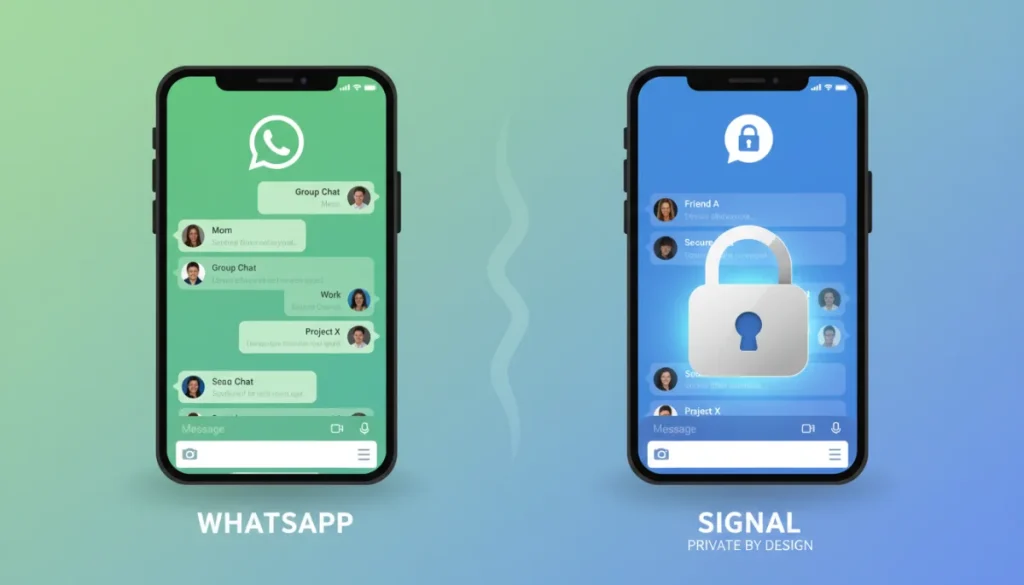
This article provides a comprehensive comparison of WhatsApp and Signal, evaluating their features for everyday messaging and dissecting their privacy and security protocols to help users make an informed decision.
Choosing the right messaging app in today’s digital landscape is more complex than ever, balancing convenience with crucial concerns about data security. This detailed guide delves into WhatsApp Signal comparison, examining their functionalities for daily communication alongside their approaches to user privacy and control.
Understanding the Core Offerings: WhatsApp and Signal
Both WhatsApp and Signal serve as primary communication tools for millions worldwide, yet they operate on fundamentally different philosophies regarding user data and privacy. WhatsApp, owned by Meta, boasts a massive user base and a feature-rich environment, making it a ubiquitous choice for personal and group chats. Signal, on the other hand, is an independent non-profit, renowned for its unwavering commitment to privacy and robust security measures.
This section will introduce the foundational aspects of each application, setting the stage for a deeper dive into their respective strengths and weaknesses. Understanding their core offerings is essential before we dissect their features and privacy policies.
WhatsApp: The Global Giant
WhatsApp’s widespread adoption is largely due to its ease of use and comprehensive feature set. It integrates seamlessly into daily life, offering a familiar interface for most smartphone users. Its journey from a simple messaging app to a communication powerhouse under Meta’s ownership has significantly shaped its development and data practices.
- User Base: Over 2 billion active users globally, fostering easy connection with almost anyone.
- Feature Richness: Voice and video calls, group chats, media sharing, status updates, and business features.
- Cross-Platform Availability: Accessible on iOS, Android, desktop, and web browsers.
Signal: The Privacy Champion
Signal has carved out its niche by prioritizing user privacy and security above all else. Developed by the Signal Foundation, a non-profit organization, it relies on donations and grants, ensuring its development is not driven by commercial data exploitation. This commitment makes it a preferred choice for individuals and organizations where sensitive communication is paramount.
- Encryption Standard: Utilizes the open-source Signal Protocol, widely regarded as the gold standard for end-to-end encryption.
- Minimal Data Collection: Collects virtually no user metadata, a stark contrast to many other messaging services.
- Independent Development: Free from corporate influence, focusing solely on privacy and secure communication.
In conclusion, while WhatsApp offers unparalleled reach and convenience, Signal distinguishes itself through its uncompromising dedication to user privacy and data security. The choice between them often boils down to a user’s priorities: broad accessibility versus stringent privacy protection.
Everyday Messaging Features: Convenience vs. Core Functionality
When comparing messaging apps, the array of features available for daily communication plays a significant role in user satisfaction. Both WhatsApp and Signal offer robust messaging capabilities, but their implementation and focus differ. This section examines how each app handles standard messaging, group chats, media sharing, and other common communication functions.
Understanding these differences helps users determine which app better aligns with their communication habits and needs, whether it’s for casual chats, family updates, or professional discussions.
Text and Multimedia Messaging
Both applications excel at sending text messages, photos, videos, and documents. WhatsApp has a slight edge in terms of file size limits and variety of media types supported, often making it more convenient for sharing larger files or specialized formats. Signal, while capable, maintains a focus on secure transmission, which might sometimes translate to slightly slower media processing for very large files, though this is rarely noticeable in everyday use.
Group chats are a cornerstone of modern communication, and both apps provide robust platforms. WhatsApp allows for larger group sizes and offers more administrative controls for group creators, including broadcast lists and community features. Signal also supports group chats with end-to-end encryption, but its group management features are slightly less expansive, prioritizing simplicity and privacy. This difference can be crucial for users managing very large communities or professional groups.
Voice and Video Calls
High-quality voice and video calls are standard on both platforms. WhatsApp’s calling infrastructure is highly optimized for various network conditions, providing reliable connections even in areas with poorer internet access. Signal also offers excellent call quality, with the added assurance that all calls are end-to-end encrypted by default, ensuring complete privacy during conversations. For users prioritizing secure voice and video communication, Signal provides an unparalleled level of confidence.
Beyond basic messaging, both apps offer unique features. WhatsApp has ‘Status’ updates, similar to Instagram stories, and a growing suite of business tools allowing companies to interact with customers. Signal, in contrast, offers ‘Disappearing Messages’ with customizable timers, ‘Screen Security’ to prevent screenshots, and a ‘Note to Self’ feature for personal reminders. These features highlight Signal’s focus on user control and privacy, while WhatsApp leans towards social integration and commercial utility.
In summary, WhatsApp often provides a broader array of convenient features and a more familiar experience for many users due to its widespread adoption. Signal, while offering all essential messaging functionalities, emphasizes privacy-centric features that enhance security and user control over their communications.
Privacy and Security Protocols: A Deep Dive
The privacy and security protocols of a messaging application are paramount, especially in an era where data breaches and surveillance are constant concerns. This section conducts a thorough examination of how WhatsApp and Signal protect user data, focusing on their encryption standards, data collection practices, and overall commitment to user anonymity.
Understanding these technical and policy differences is crucial for users who prioritize the confidentiality and integrity of their personal communications. It’s not just about what features an app has, but how it handles the information entrusted to it.
End-to-End Encryption (E2EE)
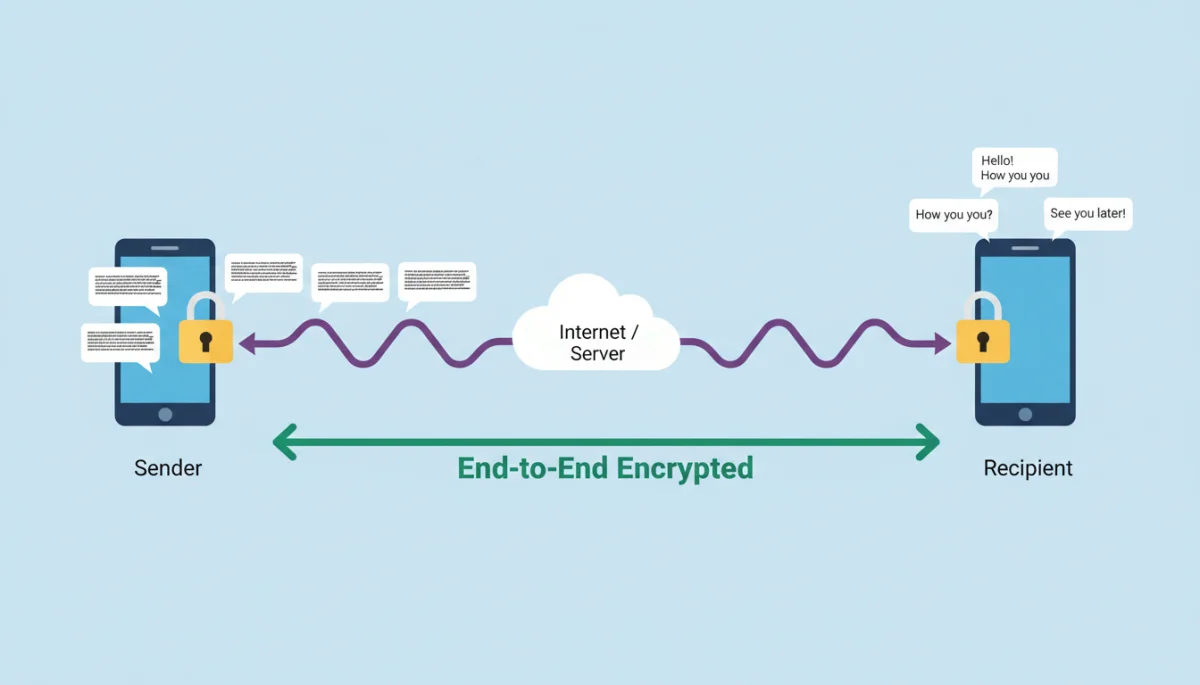
Both WhatsApp and Signal employ end-to-end encryption, meaning that messages are encrypted on the sender’s device and decrypted only on the recipient’s device. This prevents third parties, including the app providers themselves, from reading the content of messages. However, the implementation and scope of E2EE differ.
- Signal Protocol: Signal uses its own open-source Signal Protocol for all communications, which is widely audited and considered the strongest available. All messages, calls, and media are encrypted by default.
- WhatsApp’s Implementation: WhatsApp also uses the Signal Protocol for its E2EE. However, while message content is encrypted, some metadata (who you talk to, when, and from where) is collected. Backups to cloud services (Google Drive, iCloud) are not end-to-end encrypted by default, requiring users to enable an additional setting for encrypted backups.
Data Collection and Metadata
This is where the most significant divergence between the two apps lies. WhatsApp, as part of Meta, collects various forms of metadata and user data, which can include phone numbers, device IDs, IP addresses, usage patterns, and more. While message content remains encrypted, this metadata can be used for targeted advertising or shared with Meta’s family of apps. Users often express concern over this data sharing, particularly after WhatsApp’s controversial privacy policy updates.
Signal, conversely, prides itself on collecting virtually no user metadata. It only stores the phone number used for registration and the last time a user connected to the service, which is not linked to their identity. Signal’s architecture is designed to minimize the amount of data stored on its servers, making it incredibly difficult for any third party, even with a subpoena, to extract meaningful user information. This minimal data footprint is a core tenet of Signal’s privacy-first approach.
Transparency and Audits
Signal’s code is open-source, meaning security experts and the public can inspect it for vulnerabilities or backdoors. This transparency fosters trust and allows for continuous peer review, enhancing its security posture. Signal also publishes regular transparency reports detailing any government requests for user data, consistently showing that they have almost no data to provide.
WhatsApp’s client-side applications are not open-source, making it harder for external experts to independently verify its security claims beyond the Signal Protocol implementation. While WhatsApp has improved its transparency, the underlying business model of Meta often leads to skepticism regarding its data practices.
In conclusion, for users who prioritize absolute privacy and minimal data collection, Signal stands out as the clear winner. While WhatsApp offers strong content encryption, its extensive metadata collection and ties to Meta’s advertising ecosystem raise legitimate privacy concerns that Signal’s architecture is specifically designed to avoid.
User Experience and Interface: Navigating the Apps
Beyond security and features, the user experience (UX) and interface (UI) design significantly influence how users interact with a messaging app daily. A well-designed interface can make an app feel intuitive and pleasant, while a clunky one can lead to frustration. This section compares the look, feel, and overall usability of WhatsApp and Signal.
Both applications aim for simplicity and efficiency, but they achieve this in slightly different ways, reflecting their underlying philosophies. Ease of navigation and aesthetic appeal often determine long-term user retention.
WhatsApp’s Familiarity and Polish
WhatsApp’s interface is instantly recognizable to billions. Its design has evolved over the years, maintaining a clean, functional layout that prioritizes chat accessibility. The green and white theme, clear iconography, and well-organized tabs for chats, status, and calls contribute to a highly polished and user-friendly experience. New features are often integrated seamlessly, making them easy for existing users to adopt.
- Intuitive Layout: Simple tab-based navigation for chats, calls, and status updates.
- Consistent Design: A familiar aesthetic across platforms, reducing the learning curve for new users.
- Feature Integration: New functionalities like payments or communities are typically well-integrated into the existing UI.
Signal’s Clean and Purposeful Design
Signal’s interface is notably minimalist and straightforward. Its design philosophy emphasizes functionality and privacy, avoiding unnecessary clutter. The blue and white color scheme and simple navigation ensure that users can quickly access their chats and settings without distraction. While it might lack some of WhatsApp’s visual flair, its focus on core messaging functions makes it highly efficient.
- Minimalist Approach: Focus on core messaging functions, resulting in a clean and uncluttered screen.
- Privacy-Centric Cues: Clear indicators for encrypted messages and disappearing message options.
- Fast and Responsive: Often perceived as faster and more lightweight, especially on older devices.
One area where WhatsApp traditionally has an edge is its ‘Web/Desktop’ client. WhatsApp Web and Desktop are widely used, offering full functionality mirrored from the phone. Signal also offers desktop clients, which are robust and independent (meaning your phone doesn’t need to be online for the desktop app to work, unlike WhatsApp Web). However, Signal’s desktop client might require a slightly more involved setup process for first-time users compared to WhatsApp’s QR code scan.
In conclusion, WhatsApp’s interface benefits from years of refinement and widespread familiarity, offering a comprehensive and polished experience. Signal, while more minimalist, provides a highly functional and intuitive interface that effectively serves its privacy-conscious user base without sacrificing usability. The choice often comes down to personal preference for a feature-rich environment versus a streamlined, privacy-focused design.
Impact on Everyday Life: Communication Habits and Ecosystems
The choice of a messaging app extends beyond just its features and privacy policies; it significantly impacts daily communication habits and integrates into broader digital ecosystems. This section explores how WhatsApp and Signal influence how users interact with friends, family, and even businesses, considering their respective market penetration and additional services.
Understanding these broader implications helps users assess not just an app’s individual merits, but also its practical utility within their personal and professional networks.
WhatsApp’s Ecosystem Integration
WhatsApp’s immense popularity means it often serves as the default communication channel for many social circles, family groups, and even local businesses. Its integration with Meta’s ecosystem allows for potential cross-platform functionalities, though privacy concerns often arise from this. The app has also ventured into payments in some regions and offers a robust business API, making it a critical tool for small and large enterprises alike.
For many, using WhatsApp is a necessity to stay connected with the majority of their contacts. This network effect is a powerful driver of its continued dominance, making it challenging for users to switch even if they have privacy concerns. The convenience of having most of one’s contacts on a single platform is a significant draw, simplifying group coordination and general communication.
Signal’s Niche and Growing Influence
Signal, while not having the same market penetration as WhatsApp, has cultivated a dedicated user base, particularly among privacy advocates, journalists, activists, and those in professions requiring high-security communication. Its reputation for uncompromising privacy has led to its adoption by individuals who consciously choose security over convenience or broad reach.
The impact of Signal often manifests in smaller, more secure communication circles. Users might use Signal for sensitive conversations with a select group while still relying on other apps for broader, less sensitive interactions. This dual-app approach is common among privacy-conscious individuals, highlighting Signal’s role as a specialized tool rather than an all-encompassing communication platform.
Moreover, Signal’s influence extends beyond its direct user count. Its open-source Signal Protocol has become the industry standard for end-to-end encryption, adopted by other major players like WhatsApp itself. This means Signal’s innovations in security have a far-reaching impact on the overall landscape of secure messaging, even for users who don’t directly use the app.
In essence, WhatsApp shapes communication through its sheer ubiquity and broad feature set, integrating deeply into social and commercial interactions. Signal, while serving a more focused audience, provides a critical alternative for secure communication, influencing privacy standards across the industry and empowering users who prioritize data protection.
Understanding Data Ownership and Control
In the digital age, understanding who owns and controls your data is as important as knowing what features an app offers. This section delves into the policies and practices of WhatsApp and Signal regarding data ownership, user control over their information, and how each platform handles requests for data from governments or law enforcement agencies.
This aspect is critical for users concerned about their digital rights and the long-term implications of sharing personal information through messaging platforms.
WhatsApp and Meta’s Data Practices
As a Meta product, WhatsApp’s data practices are inherently tied to its parent company’s business model, which relies heavily on data collection and analysis for targeted advertising. While WhatsApp maintains that message content is private due to E2EE, the vast amounts of metadata it collects can provide significant insights into user behavior and social graphs. Users have limited control over what metadata is collected, though they can manage some privacy settings like ‘last seen’ or profile visibility.
When it comes to government requests, WhatsApp is legally obligated to comply with valid legal orders. While it cannot decrypt end-to-end encrypted messages, it can and does provide metadata, such as account information, connection logs, and details about who communicated with whom, when, and from where. This data, even without message content, can be highly revealing and has been used in various investigations.
Signal’s User-Centric Data Control
Signal’s entire architecture is built around the principle of minimal data collection, which inherently gives users more control over their information. Because Signal stores almost no user data on its servers, there’s very little for anyone, including Signal itself, to access or share. This design choice is a proactive measure to protect user privacy against both commercial exploitation and governmental surveillance.
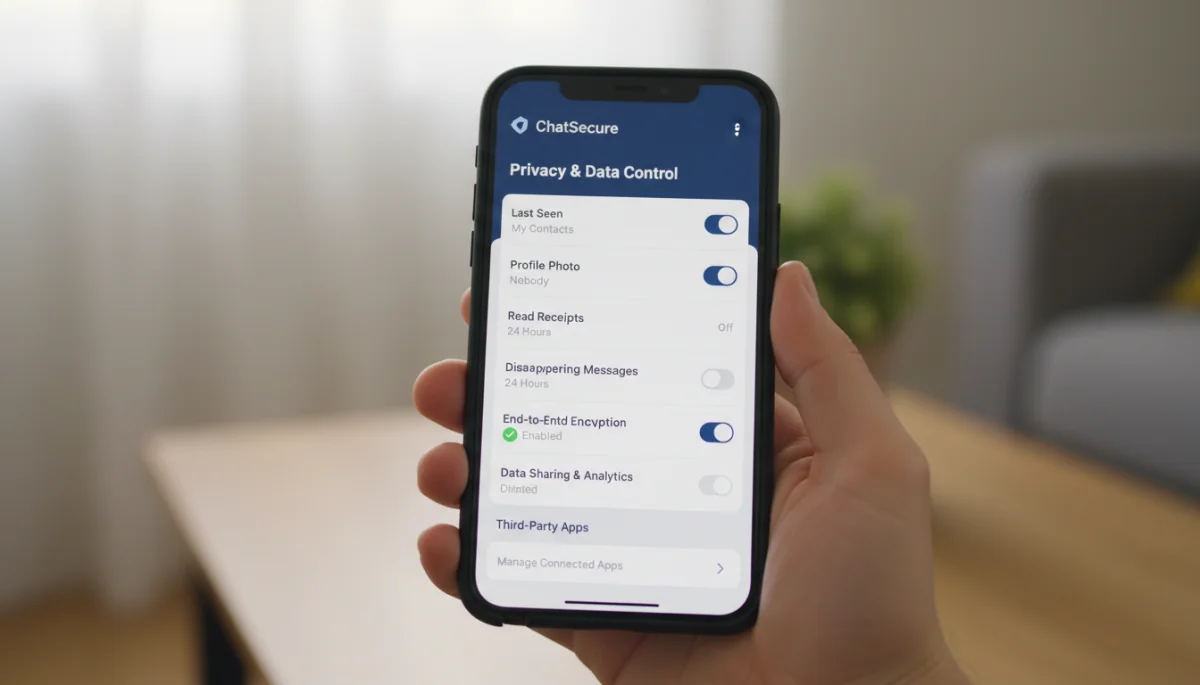
Signal offers robust user controls, including disappearing messages, read receipts, and the ability to prevent screenshots in chats, empowering users to manage the longevity and visibility of their communications. When faced with government requests for data, Signal’s response is consistent: they simply don’t have the data to provide beyond basic registration information (phone number and last connection time, which is not linked to identity). This has been publicly demonstrated in court documents, solidifying its reputation as the most secure messaging app from a data control perspective.
The open-source nature of Signal’s code further enhances user control by allowing independent verification of its privacy claims. Users can trust that the app functions as advertised, without hidden data collection mechanisms. This level of transparency is a cornerstone of true data ownership and control.
In conclusion, WhatsApp’s data practices, while protecting message content, involve significant metadata collection and are subject to Meta’s broader data ecosystem. Signal, through its design and non-profit structure, offers unparalleled user control by minimizing data collection and ensuring that virtually no sensitive information is stored or accessible to third parties, including itself.
Choosing the Right Messenger: Balancing Priorities
The decision between WhatsApp and Signal ultimately hinges on a user’s individual priorities, balancing the desire for widespread connectivity with the critical need for privacy and security. There is no one-size-fits-all answer, as each app excels in different areas, catering to distinct user needs and concerns.
This section will help consolidate the information presented, offering guidance on how to weigh the various factors and make an informed choice that aligns with personal communication requirements and values.
Prioritizing Connectivity and Features
If your primary concern is to connect with the largest possible number of people and access a broad range of features, WhatsApp remains an incredibly compelling choice. Its vast user base means that most of your contacts are likely already on the platform, simplifying group chats, family communication, and casual interactions. The convenience of its status updates, business features, and payment options (in some regions) adds to its appeal as an all-in-one communication hub.
For users who are less concerned about metadata collection and trust WhatsApp’s end-to-end encryption for message content, the app offers an unparalleled combination of reach and functionality. Its polished interface and continuous feature development make it a comfortable and familiar choice for everyday use.
Prioritizing Privacy and Security
If, however, privacy and security are your paramount concerns, Signal stands out as the unequivocal leader. Its commitment to minimal data collection, robust open-source encryption, and independent non-profit structure provides the highest level of assurance that your communications remain private and your metadata is not exploited. For sensitive conversations, professional communications, or simply a desire for greater digital autonomy, Signal is the superior option.
While Signal’s user base is smaller, its growing adoption among privacy-conscious individuals means you might find more of your critical contacts there than before. Many users opt for a hybrid approach, using WhatsApp for general communication and Signal for sensitive or private discussions, thereby leveraging the strengths of both platforms.
Consider Your Digital Footprint
Ultimately, the choice reflects your personal stance on digital privacy and your comfort level with data sharing. WhatsApp’s business model inherently involves more data collection, even if message content is encrypted. Signal’s model, funded by donations, allows it to focus solely on user privacy without commercial incentives to collect data.
Consider the types of conversations you have and with whom. For highly sensitive information, professional communications, or discussions that could have significant personal ramifications, Signal offers peace of mind. For everyday chatter, sharing memes, and coordinating casual events, WhatsApp’s convenience might outweigh privacy concerns for some.
In conclusion, both WhatsApp and Signal are excellent messaging apps, but they cater to different priorities. WhatsApp offers convenience and widespread reach, while Signal provides unmatched privacy and security. Your choice should be a conscious decision based on your personal values regarding data, connectivity, and digital autonomy.
| Key Feature | WhatsApp vs Signal Comparison |
|---|---|
| End-to-End Encryption | Both use Signal Protocol; Signal encrypts all data by default, including metadata. WhatsApp encrypts message content, but collects significant metadata. |
| Data Collection | WhatsApp collects extensive metadata (usage, contacts, IP). Signal collects minimal data (phone number, last connection time). |
| User Base & Features | WhatsApp boasts 2B+ users, rich features (Status, Business API). Signal has a smaller, privacy-focused base with core messaging and unique privacy tools (disappearing messages). |
| Ownership & Business Model | WhatsApp is owned by Meta, with a data-driven advertising model. Signal is a non-profit, funded by donations, with no commercial incentive to collect user data. |
Frequently Asked Questions About Messaging Apps
Yes, Signal is generally considered more secure than WhatsApp. While both use the strong Signal Protocol for end-to-end encryption of messages, Signal collects significantly less user metadata. This minimal data footprint means there’s less information about you available to Signal itself or any third parties, enhancing overall privacy and security.
WhatsApp’s privacy policy states that it shares certain information with Meta (formerly Facebook) and its other companies. While message content remains end-to-end encrypted, metadata like your phone number, device information, IP address, and how you interact with others can be shared and used for purposes like targeted advertising across Meta’s platforms.
Signal requires access to your contacts to function as a messaging app, as it needs to know which of your contacts are also Signal users. However, Signal hashes and cryptographically processes your contact list, meaning it never sends your raw contact data to its servers. This method ensures your privacy while still enabling contact discovery.
The primary disadvantage of Signal is its smaller user base compared to WhatsApp. This can make it harder to connect with all your contacts if they are not also on Signal. Additionally, it offers fewer ‘social’ features like status updates or extensive business tools, focusing strictly on secure communication over broad functionality.
The decision depends on your priorities. If maximum privacy, minimal data collection, and robust security are your top concerns, switching to or primarily using Signal is highly recommended. If broad connectivity, a large user base, and diverse features for casual communication are more important, WhatsApp might still suit your needs, possibly alongside Signal for sensitive chats.
Conclusion
In the evolving landscape of digital communication, the choice between WhatsApp and Signal presents a clear dichotomy: widespread convenience versus uncompromising privacy. While WhatsApp offers an expansive network and a rich array of features that cater to diverse communication needs, its ties to Meta’s data ecosystem raise legitimate concerns for privacy-conscious users. Signal, conversely, stands as a beacon of digital autonomy, prioritizing user security and data minimization above all else. Your ultimate decision should reflect a careful consideration of your personal values, communication habits, and the level of privacy you demand from your digital tools. Both platforms serve their purpose admirably, but understanding their fundamental differences empowers you to make an informed choice that aligns with your digital well-being.
