Meetup vs. Discord: Event Discovery & Community Interaction
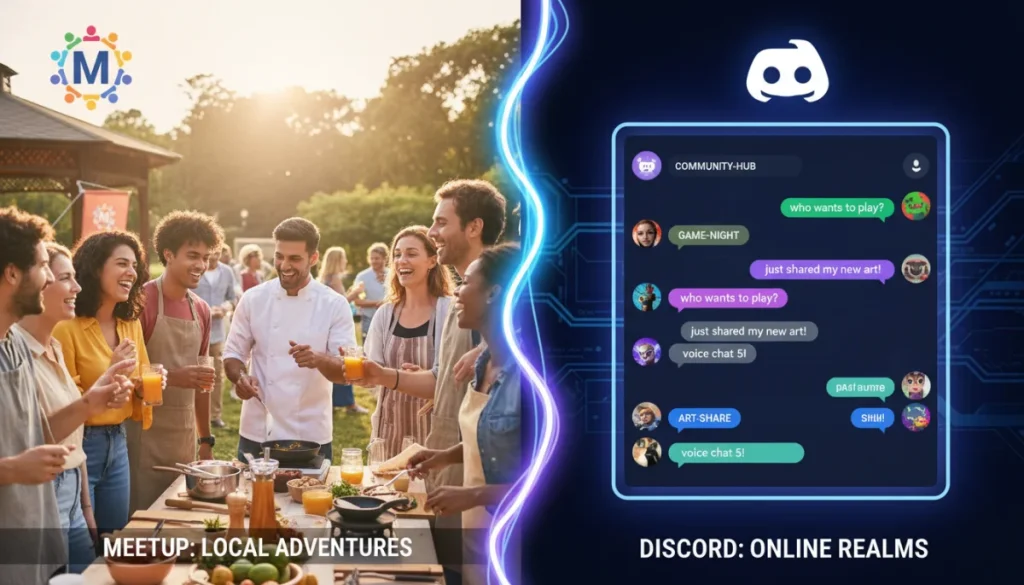
Understanding the distinct features of Meetup and Discord is crucial for users seeking to optimize their approach to both real-world event discovery and continuous online community interaction.
In today’s interconnected world, finding like-minded individuals and engaging in meaningful interactions, both online and offline, has become a cornerstone of personal and professional growth. The digital landscape offers a plethora of platforms designed to facilitate these connections, but two stand out for their distinct approaches: Meetup and Discord. This article delves into the nuances of Meetup versus Discord: event discovery and online community interaction, examining how each platform serves its users and which might be the better fit for your specific needs. From organizing local gatherings to fostering vibrant digital spaces, understanding their core functionalities is key to leveraging their full potential.
Understanding Meetup: The Hub for Local Gatherings
Meetup has long been recognized as the go-to platform for discovering and organizing local, in-person events. Its fundamental design revolves around bringing people together based on shared interests, hobbies, or professional goals. Whether you’re looking for a hiking group, a coding workshop, a book club, or a support network, Meetup provides the infrastructure to find existing groups or create your own, making it an invaluable tool for real-world community building.
The platform’s strength lies in its ability to translate online interest into tangible, face-to-face interactions. Users can browse events by category, location, and date, making it incredibly easy to discover activities happening in their vicinity. Group organizers benefit from robust tools for event scheduling, member communication, and even payment collection for ticketed events. This focus on physical gatherings distinguishes Meetup significantly from platforms primarily dedicated to online interaction.
Key Features of Meetup
- Event-Centric Design: Meetup’s interface is built around events, making it simple to see what’s happening and when.
- Location-Based Discovery: Users can filter events and groups by geographical proximity, ensuring relevance to their local area.
- Diverse Categories: From technology and business to health and hobbies, a wide range of interests are covered, catering to a broad audience.
- Organizer Tools: Comprehensive features for managing RSVPs, communicating with members, and promoting events.
Ultimately, Meetup thrives on the human desire for direct engagement and shared experiences in the physical world. It bridges the gap between digital discovery and real-life camaraderie, fostering communities that extend beyond the screen. For those prioritizing face-to-face interaction and local networking, Meetup remains an unparalleled resource.
Discord’s Ecosystem: Dynamic Online Community Interaction
In stark contrast to Meetup’s focus on physical events, Discord has rapidly evolved into a powerhouse for online community interaction. Originally popular among gamers, it has expanded its reach to encompass virtually any interest group imaginable, from artists and developers to educators and hobbyists. Discord servers act as digital hubs where users can communicate in real-time through text, voice, and video channels, creating persistent online communities.
The platform’s strength lies in its versatility and deep customization options. Server owners can structure their communities with various channels dedicated to specific topics, roles, and permissions, allowing for nuanced and organized discussions. This level of control enables the creation of highly specialized and engaged online environments, fostering a strong sense of belonging among members who might be geographically dispersed.
Core Functionalities of Discord
- Multi-Channel Communication: Supports text, voice, and video chat within a single server, facilitating diverse interaction methods.
- Role-Based Permissions: Allows administrators to assign roles to members, granting or restricting access to specific channels and features.
- Integrations and Bots: Extensible through numerous third-party integrations and custom bots that automate tasks, moderate content, and enhance user experience.
- Persistent Online Presence: Unlike event-specific platforms, Discord communities are always active, fostering continuous engagement and real-time interaction.
Discord excels at creating a sense of constant connection and shared space, regardless of physical location. It’s a platform where conversations flow continuously, friendships are forged, and collaborative projects can unfold seamlessly. For those seeking vibrant, ongoing online communities, Discord offers an unmatched level of engagement and flexibility.
Event Discovery: How Each Platform Approaches It
While both platforms facilitate connection, their approaches to event discovery are fundamentally different, reflecting their core missions. Meetup is explicitly designed for discovering and promoting events, making it intuitive for users to find gatherings based on their interests and location. Discord, on the other hand, approaches events as an integral part of ongoing community life rather than its primary focus.
On Meetup, event discovery is front and center. The homepage often showcases recommended events, and users can actively search for specific activities or browse categories. Event pages provide all necessary details: date, time, location, description, and an RSVP option. This streamlined process makes it easy for individuals to participate in new experiences and expand their social circle.
Event Discovery on Meetup
- Dedicated Event Listings: Clear, searchable directories of upcoming events.
- Personalized Recommendations: Algorithms suggest events based on user interests and past attendance.
- Easy RSVP and Calendar Integration: Simple ways to commit to events and add them to personal calendars.
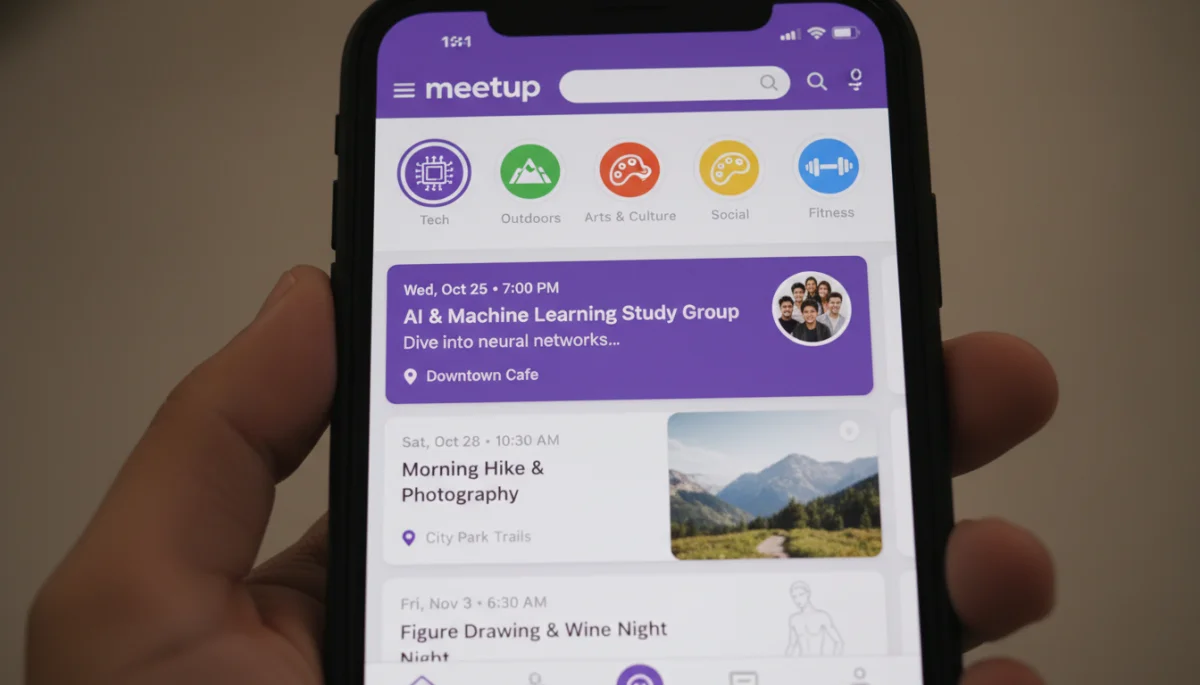
Discord’s event discovery is more organic and community-driven. Events are typically created and announced within specific servers, often through dedicated event channels or announcements. While Discord has introduced an ‘Events’ feature, allowing server members to create and track upcoming activities, it’s primarily for internal server use. Discovery beyond a user’s joined servers is limited, emphasizing the platform’s role in fostering existing communities.
Event Discovery on Discord
- Server-Specific Events: Events are primarily organized and promoted within the confines of a particular Discord server.
- Community Announcements: Information about events is often shared through text channels, voice chat, or server announcements.
- Limited External Discovery: Discovering events outside of servers you’ve already joined is less straightforward compared to Meetup.
In essence, Meetup is a marketplace for events, while Discord is a venue where events might occasionally occur as part of broader community engagement. Your priority—whether it’s finding new events or integrating events into an established online group—will dictate which platform is more effective for your event discovery needs.
Community Interaction: Real-time vs. Scheduled Engagement
The nature of community interaction on Meetup and Discord also presents a clear divergence. Meetup primarily facilitates scheduled, in-person interactions, with online communication often serving as a logistical layer. Discord, conversely, is built for continuous, real-time online engagement, where conversations can happen asynchronously or synchronously across various channels.
On Meetup, interactions typically revolve around the specific events. Members might chat in a group forum leading up to an event, or share photos and comments afterward. However, the bulk of the interaction is expected to happen during the physical gathering. The online tools support the offline experience, making sure attendees are informed and connected before and after they meet.
Discord, however, offers a persistent digital space where interaction never truly stops. Members can drop into voice channels for spontaneous conversations, participate in ongoing text discussions, or collaborate on projects in shared spaces. This constant availability fosters a deeper sense of community and allows for more fluid, less structured interactions that mirror real-life social dynamics, but in a digital realm.
Meetup’s Interaction Style
- Event-Focused Communication: Discussions often center around event logistics, RSVPs, and post-event feedback.
- Predominantly Offline Interaction: The primary goal is to facilitate face-to-face meetings and experiences.
- Asynchronous Online Chat: Group message boards or direct messages are used for coordination rather than continuous social interaction.
Discord’s ecosystem is designed for constant engagement. Its voice channels are particularly effective for fostering spontaneous conversations, study groups, or gaming sessions. Text channels can be highly specialized, allowing members to delve deep into niche topics without overwhelming others. This multi-modal, always-on approach creates a dynamic and immersive environment for community members.
Discord’s Interaction Style
- Real-time and Asynchronous: Supports both live voice/video calls and ongoing text discussions.
- Multi-Channel Engagement: Diverse channels for different topics, allowing for varied forms of interaction.
- Persistent Online Presence: Communities remain active 24/7, fostering a continuous sense of connection.
The choice between these two platforms for community interaction boils down to whether you prioritize structured, intermittent physical gatherings (Meetup) or dynamic, continuous online engagement (Discord). Both have their merits, depending on the nature of the community you wish to build or join.
Strengths and Weaknesses: A Balanced Perspective
A comprehensive comparison of Meetup and Discord requires an honest look at their respective strengths and weaknesses. Each platform excels in certain areas while presenting limitations in others, making them suitable for different user needs and community types.
Meetup’s primary strength lies in its unparalleled ability to facilitate real-world connections. It simplifies the process of finding and joining local groups, making it ideal for those looking to expand their social circle, learn a new skill in person, or participate in local activities. Its event management tools are robust, allowing organizers to efficiently plan and promote gatherings. However, Meetup’s online interaction features are relatively basic, often limited to event-specific discussions and announcements. It’s not designed for continuous, casual online chat, and its global discovery capabilities are less pronounced than its local focus.
Meetup’s Pros and Cons
- Pros: Excellent for local event discovery, strong organizer tools for physical gatherings, fosters face-to-face connections.
- Cons: Limited continuous online interaction, less versatile for purely digital communities, relies heavily on physical proximity.
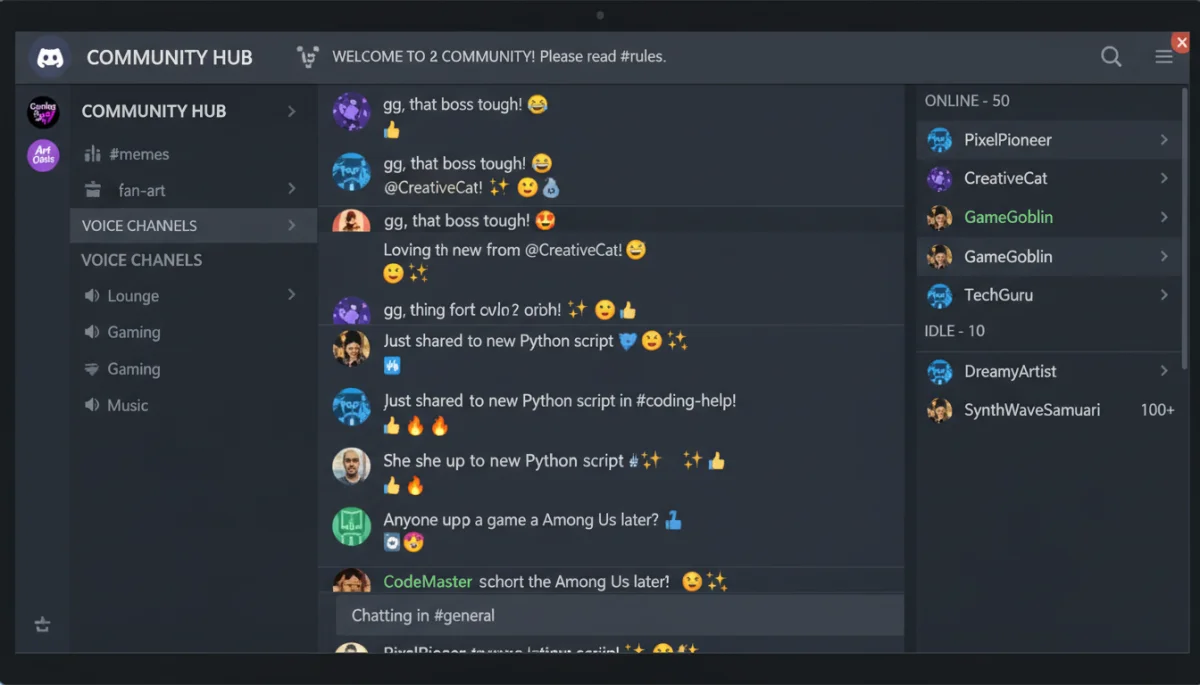
Discord, on the other hand, shines in fostering vibrant, real-time online communities. Its extensive customization options, multi-modal communication channels (text, voice, video), and integration capabilities make it a powerful tool for building highly engaged digital spaces. It’s perfect for niche communities, collaborative projects, and ongoing social interaction regardless of geographical location. Its main weakness is its less intuitive approach to discovering new communities for beginners, as discovery is often driven by external links or word-of-mouth. While it has an ‘Events’ feature, it’s primarily for internal server use and doesn’t offer the broad public event discovery that Meetup does.
Discord’s Pros and Cons
- Pros: Superior for continuous online interaction, highly customizable servers, supports diverse communication methods, strong for niche communities.
- Cons: Less effective for public event discovery, steeper learning curve for new users, primarily focused on online engagement.
Understanding these trade-offs is crucial when deciding which platform aligns best with your community-building goals or your desire to discover new groups and activities. Neither platform is inherently superior; rather, their utility depends on the specific context and desired outcomes.
Choosing the Right Platform for Your Needs
Deciding between Meetup and Discord ultimately depends on your primary objectives for event discovery and community interaction. Both platforms offer valuable services, but they cater to distinct needs and preferences. By evaluating what you hope to achieve, you can make an informed choice that maximizes your engagement and satisfaction.
If your goal is to find or organize local, in-person events and foster face-to-face connections, Meetup is likely your best bet. Its intuitive interface for event discovery, robust RSVP system, and focus on geographical proximity make it ideal for expanding your social circle through shared activities. Whether it’s a hiking club, a professional networking event, or a language exchange, Meetup connects you with opportunities in your local community.
Conversely, if you’re looking to build or join a dynamic, persistent online community where real-time chat, voice discussions, and collaborative activities are paramount, Discord stands out. It’s perfect for niche interest groups, online gaming clans, educational hubs, or any community that thrives on continuous digital interaction. The platform’s flexibility allows for deep customization, creating a tailored environment for its members.
Considerations for Your Choice
- Type of Interaction: Do you prioritize in-person meetings or online discussions?
- Community Structure: Are you seeking local groups for specific activities, or a global online hub for shared interests?
- Event Focus: Is your main goal discovering public events, or organizing internal activities for an existing group?
- Technical Comfort: Are you comfortable with a more feature-rich, customizable platform like Discord, or prefer Meetup’s simpler event-centric design?
Many individuals and organizations even find value in using both platforms in conjunction. For instance, a community might use Meetup to announce and manage physical gatherings, while also maintaining a Discord server where members can continue discussions between meetings, share resources, collaborate on projects, and engage in more casual, real-time conversations. This hybrid approach leverages the strengths of each platform, providing a comprehensive solution for both event discovery and continuous community interaction.
Hybrid Approaches and Future Trends in Community Building
As the digital landscape continues to evolve, so too do the strategies for community building and event discovery. A growing trend involves hybrid approaches, where organizations and individuals leverage multiple platforms to cater to diverse preferences and maximize engagement. Instead of viewing Meetup and Discord as mutually exclusive, many are finding success by integrating them into a broader community strategy.
For example, a local professional networking group might use Meetup to schedule monthly in-person meetings, providing a clear pathway for new members to discover and attend events. Simultaneously, they could operate a Discord server where members can continue discussions between meetings, share resources, collaborate on projects, and engage in more casual, real-time conversations. This allows the community to maintain a strong physical presence while also fostering a dynamic and accessible online hub.
Benefits of a Hybrid Strategy
- Increased Reach: Attracts members who prefer either online or in-person interactions, or both.
- Enhanced Engagement: Provides continuous opportunities for interaction, preventing community dormancy between physical events.
- Diverse Communication: Caters to different communication styles and preferences, from structured meetings to spontaneous chats.
- Resilience: Offers alternatives for engagement during unforeseen circumstances, such as restrictions on physical gatherings.
Looking ahead, the lines between online and offline community interaction are likely to blur even further. Platforms may introduce more integrated features, or new tools might emerge that seamlessly blend event discovery with persistent digital spaces. The key will be adaptability and a willingness to explore how different technologies can work together to create rich, engaging community experiences. Understanding the distinct roles of platforms like Meetup and Discord is the first step in navigating this evolving landscape and building resilient, thriving communities.
| Feature | Description |
|---|---|
| Meetup Focus | Specializes in local, in-person event discovery and organization for real-world connections. |
| Discord Focus | Excels in dynamic, real-time online community interaction through text, voice, and video channels. |
| Event Discovery | Meetup offers public, searchable event listings; Discord’s events are primarily server-internal. |
| Community Interaction | Meetup supports scheduled, event-centric communication; Discord fosters continuous, multi-modal engagement. |
Frequently Asked Questions
Meetup is generally better for finding local activities. Its core design focuses on connecting individuals with in-person events and groups based on geographical location and shared interests, making it highly effective for discovering local gatherings and expanding your social circle in your immediate area.
While Discord has an ‘Events’ feature, it’s primarily designed for internal server use to announce and track activities for existing members. It lacks the public discovery and robust organizer tools that Meetup offers for promoting and managing in-person events to a broader audience outside your immediate server community.
No, Discord is not only for gamers. While it originated in the gaming community, it has evolved into a versatile platform for all types of interest groups, including artists, developers, educators, hobbyists, and professional communities, offering robust tools for text, voice, and video communication for diverse online interactions.
Discord is significantly more effective for building a global online community. Its extensive customization options, multi-channel communication (text, voice, video), and persistent online presence facilitate continuous, real-time interaction among members regardless of their geographical location, fostering strong digital bonds.
Yes, Meetup and Discord can be used together effectively. Many communities leverage Meetup for public event discovery and management of in-person gatherings, while simultaneously using Discord for ongoing online discussions, casual communication, and resource sharing between those physical events, creating a comprehensive hybrid community experience.
Conclusion
In the dynamic landscape of digital connectivity, both Meetup and Discord offer distinct, valuable pathways for event discovery and community interaction. Meetup stands as the venerable platform for orchestrating real-world encounters, making it an indispensable tool for those seeking local activities and face-to-face networking. Its strength lies in transforming online interest into tangible, shared experiences. Discord, conversely, has carved out its niche as a vibrant, versatile hub for continuous online engagement, fostering deep connections within specialized digital communities through its rich communication features. Ultimately, the choice between these two powerful platforms hinges on your specific needs: whether you prioritize the discovery of local, in-person events or the cultivation of an active, persistent online community. Understanding their unique strengths allows users to strategically leverage each platform, or even combine them, to build and sustain the connections that matter most in an increasingly interconnected world.
