Community Moderation Signals: A Guide for Active Members

Understanding community moderation signals is crucial for anyone considering active participation in an online group, as it reveals the health and safety of the environment and its commitment to respectful interaction.
Before diving headfirst into an online group, understanding community moderation signals is paramount. These subtle — and sometimes not-so-subtle — cues provide invaluable insight into the health, safety, and overall culture of a digital space, guiding your decision to become an active member.
Decoding the Community’s Core Values and Rules
Every thriving online community operates on a foundation of shared values and clearly defined rules. Before you commit to becoming an active member, it’s essential to understand these underlying principles, as they directly influence the moderation style and the overall user experience. A community’s values are often reflected in its public statements, mission, and the types of content it encourages or discourages.
The rules, on the other hand, are the explicit guidelines that dictate acceptable behavior. These should be easily accessible and clearly articulated. A well-moderated community will not only have rules but will also demonstrate a consistent application of them, fostering a predictable and fair environment for all participants. This consistency is a primary community moderation signal.
Accessibility and Clarity of Guidelines
The first step in decoding a community’s core values is to locate its guidelines. Are they prominently displayed? Are they easy to understand, or are they buried in legal jargon? Transparent and accessible rules are a strong indicator of a community that values its members and wants them to succeed within its framework.
- Look for a dedicated ‘Rules’ or ‘Guidelines’ section.
- Assess if the language is clear, concise, and unambiguous.
- Check if examples are provided for better understanding of complex rules.
Beyond the written rules, observe how these guidelines are discussed by existing members and moderators. Do they refer to them frequently? Is there a shared understanding of what constitutes acceptable behavior? This collective interpretation can be as revealing as the written document itself.
Evidence of Enforcement and Fairness
Rules are only as good as their enforcement. A community with strict rules but lax or inconsistent moderation can be more chaotic than one with fewer rules but diligent oversight. Pay attention to how violations are handled. Are warnings issued? Is content removed? Are repeat offenders penalized?
Crucially, assess the fairness of enforcement. Does it appear that certain members are held to different standards? A healthy community applies its rules equitably to everyone, regardless of their status or popularity. Inconsistent enforcement is a red flag that can lead to resentment and a breakdown of trust within the community.
In conclusion, a deep dive into a community’s core values and explicit rules, coupled with an observation of their accessibility, clarity, and consistent application, provides a solid initial assessment of its moderation health. These elements form the bedrock upon which a respectful and engaging online space is built.
Observing Moderator Engagement and Responsiveness
The human element of moderation is arguably the most critical community moderation signal. How moderators interact with members, their responsiveness to issues, and their overall presence significantly shape the community’s atmosphere. Effective moderators are not just rule enforcers; they are facilitators of discussion, educators, and protectors of the community’s integrity.
Before committing to active participation, take time to observe the moderation team in action. Their style, frequency of interaction, and the tone they set can tell you a great deal about the community’s health and whether it aligns with your expectations for a positive online environment.
Proactive vs. Reactive Moderation
A key distinction to look for is whether moderation is primarily proactive or reactive. Proactive moderation involves moderators actively participating in discussions, guiding conversations, and intervening before conflicts escalate. This often manifests as helpful comments, clarifications of rules, or gentle redirection of off-topic discussions.
Reactive moderation, while necessary, focuses more on responding to reported issues or addressing clear violations after they occur. While a balance of both is ideal, a community that leans heavily on proactive moderation often feels more welcoming and better managed, preventing issues rather than just cleaning them up. Observe if moderators are present in general discussions or only appear when there’s a problem.
- Do moderators engage in general conversations or only in disciplinary contexts?
- Are they visible in welcoming new members or clarifying common queries?
- Is there evidence of them guiding discussions positively rather than just shutting down negativity?
Timeliness and Tone of Responses
When issues do arise, the speed and tone of moderator responses are critical. A community with a healthy moderation team will address concerns promptly, demonstrating that member safety and adherence to rules are priorities. Delays in response can allow negative situations to fester, causing frustration and potentially driving members away.
Equally important is the tone. Do moderators communicate respectfully and professionally, even when addressing difficult situations? Do they explain their decisions clearly and calmly, or do they appear dismissive or overly aggressive? A moderate, educative tone fosters trust and encourages members to understand and comply with rules, rather than simply fearing punishment.
In summary, the engagement and responsiveness of a community’s moderation team are powerful indicators of its health. Proactive involvement, timely interventions, and a respectful, clear communication style are strong positive community moderation signals, suggesting a well-managed and member-focused environment.
Analyzing Member Behavior and Community Culture
While rules and moderators set the stage, the true character of an online community is often reflected in the behavior of its members. The collective actions and interactions of participants create the community’s culture, which can either be inviting and supportive or hostile and exclusionary. Understanding this dynamic is crucial for anyone considering active membership.
Before you jump in, spend time lurking and observing. Read through various threads, pay attention to comment sections, and note how members interact with each other and with the moderation team. This passive observation can reveal deep insights into the community’s unspoken norms and whether you’ll feel comfortable contributing.

Prevalence of Constructive vs. Destructive Interactions
One of the most telling community moderation signals is the balance between constructive and destructive interactions. In a healthy community, discussions are generally respectful, even when disagreements arise. Members offer support, share knowledge, and engage in meaningful dialogue. Look for instances where members genuinely help each other, provide thoughtful feedback, and celebrate successes.
Conversely, a community plagued by destructive interactions will exhibit frequent arguments, personal attacks, trolling, or excessive negativity. While occasional disagreements are normal, a consistent pattern of hostility indicates a problematic culture, often stemming from ineffective moderation or a lack of clear behavioral expectations. Pay attention to how these negative interactions are handled by other members and moderators.
Inclusivity and Respect for Diversity
A truly healthy community embraces diversity and fosters an inclusive environment where individuals from all backgrounds feel welcome and respected. Observe whether different viewpoints are tolerated and discussed civilly, or if dissenting opinions are met with aggression or ostracization. Look for language that is respectful and inclusive, avoiding discriminatory or derogatory terms.
Consider how new members are treated. Are they welcomed and guided, or are they ignored or ridiculed for asking basic questions? A community that values inclusivity will make an effort to integrate new members and ensure everyone feels they have a voice. The presence or absence of these elements speaks volumes about the community’s maturity and its commitment to fostering a positive space.
In essence, member behavior provides a living testament to a community’s culture. A predominance of constructive interactions, coupled with a strong sense of inclusivity and mutual respect, are powerful indicators of a well-moderated and thriving online space where you can confidently become an active member.
Evaluating Reporting Mechanisms and Transparency
Even in the best-moderated communities, issues will inevitably arise. What distinguishes a well-run community from a chaotic one is the existence and effectiveness of its reporting mechanisms, alongside a commitment to transparency in moderation decisions. These elements are crucial community moderation signals that build trust and empower members to contribute to a safe environment.
Before you become an active participant, understand how problems are reported and how the moderation team communicates about their actions. A clear, accessible, and transparent system ensures that members feel heard and that appropriate action is taken when necessary, reinforcing accountability.
Ease of Reporting and Feedback Channels
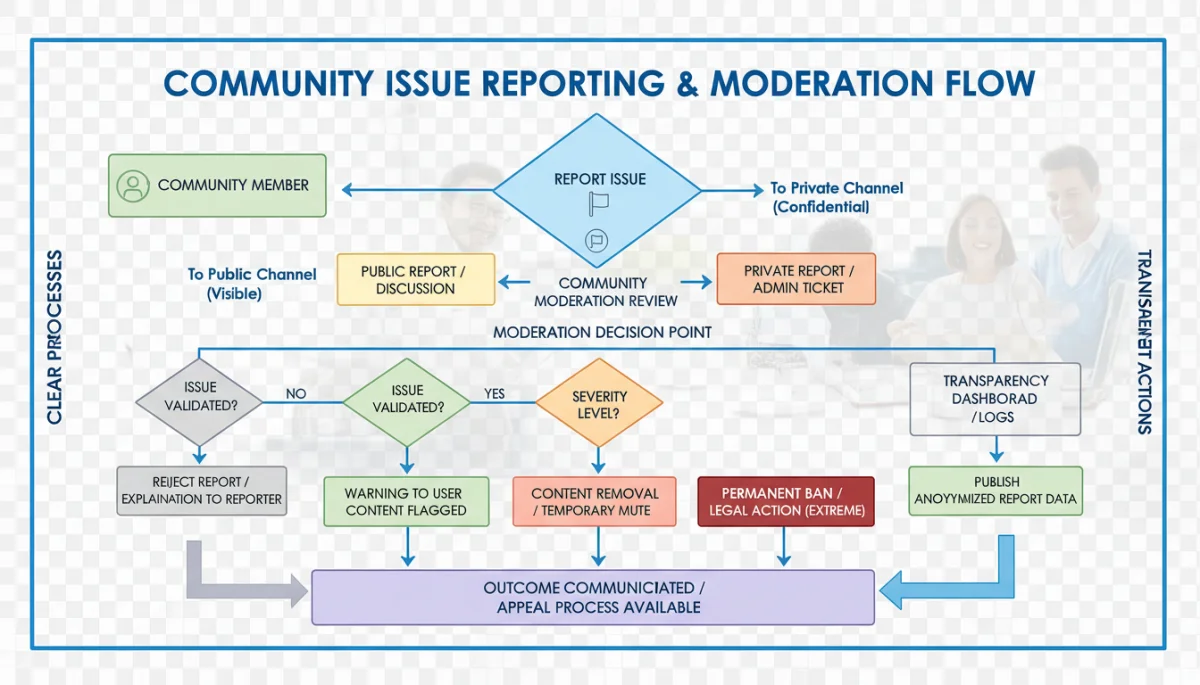
A strong community will have clear and easy-to-use reporting mechanisms. This could be a simple ‘report’ button on posts, a dedicated email address for moderation, or a private messaging channel to moderators. The easier it is for members to flag problematic content or behavior, the more likely they are to do so, allowing moderators to address issues promptly.
Beyond reporting, consider if there are channels for providing feedback on moderation decisions or suggesting improvements to the community. A healthy community values member input and uses it to evolve its practices. The absence of such channels can indicate a top-down approach to moderation that may not be responsive to member needs.
- Is there an obvious and intuitive way to report issues?
- Are there clear instructions on what information to include in a report?
- Can members easily provide feedback on moderation or community rules?
Transparency in Moderation Decisions
Transparency doesn’t necessarily mean publicizing every single moderation action, but it does mean being clear about the *types* of actions taken and the *reasons* behind them. For example, a community might have a public log of removed content (without revealing personal details) or regularly post summaries of common violations and how they are addressed.
When a member’s content is removed or they receive a warning, is there a clear explanation provided? Do moderators explain which rule was violated and why? This level of transparency helps members understand the boundaries and learn from mistakes, rather than feeling arbitrarily punished. It fosters a sense of fairness and trust, which are vital for long-term community health.
In conclusion, robust and accessible reporting mechanisms, coupled with a commitment to transparent moderation decisions, are essential community moderation signals. They empower members to contribute to a safer space and build confidence that the community is managed fairly and effectively, ensuring a positive experience for all.
Assessing Community Growth and Activity Patterns
Beyond the immediate interactions, the long-term health of an online community can be gleaned from its growth trajectory and activity patterns. These broader trends serve as crucial community moderation signals, indicating whether the community is stagnant, thriving, or potentially in decline. A dynamic and growing community often reflects effective moderation and a welcoming environment.
Before fully investing your time and energy, take a moment to observe the community’s pulse. Are new members joining regularly? Is there consistent engagement from existing members? These patterns can offer insights into the community’s vitality and its potential for sustained positive interaction.
Steady Growth vs. Stagnation or Decline
A healthy online community typically exhibits steady, organic growth. This doesn’t necessarily mean explosive growth, but rather a consistent influx of new members who are actively participating. Look for signs of new introductions, questions from newcomers, and discussions that incorporate fresh perspectives. Steady growth suggests that the community is attracting and retaining members, often a result of a positive environment nurtured by good moderation.
Conversely, a community that shows signs of stagnation (few new members, repetitive discussions, decreasing overall activity) or decline (members leaving, fewer posts, long periods of inactivity) might indicate underlying issues. While not always directly tied to moderation, these patterns can sometimes signal a failure to address toxicity, a lack of engaging content, or an inability to adapt to changing member needs.
Consistent Engagement and Content Refresh
Active communities are characterized by consistent engagement across various topics and a regular refresh of content. Are discussions vibrant and ongoing? Do members initiate new threads, or do they only reply to existing ones? A diverse range of topics and active participation in multiple areas are positive indicators.
Also, observe the quality and originality of the content being shared. Is it insightful, helpful, or creative? Or is it mostly low-effort posts, spam, or recycled information? A community where members feel safe and encouraged to share high-quality content is a strong testament to effective moderation and a supportive culture. The presence of varied and thoughtful contributions is a clear community moderation signal of a healthy ecosystem.
In essence, by analyzing growth trends and activity patterns, you can gain a macroeconomic view of a community’s health. Steady growth, consistent engagement, and a continuous influx of fresh, quality content are strong indicators of a vibrant and well-managed online space that is likely to offer a rewarding experience for active members.
Identifying Red Flags: When to Exercise Caution
While looking for positive community moderation signals is crucial, it’s equally important to identify red flags that suggest a potentially problematic environment. Recognizing these warning signs early can save you from investing time and emotional energy in a community that may not align with your values or provide a safe space for interaction. Vigilance is key to protecting your online experience.
These red flags can manifest in various ways, from the absence of clear rules to overt hostility, and understanding them helps you make an informed decision about active participation. Trust your instincts; if something feels off, it probably is.
Absence of Clear Rules or Inconsistent Enforcement
One of the most significant red flags is the absence of easily accessible and clear community guidelines. If you can’t quickly find the rules, or if they are vague and open to wide interpretation, it’s a sign that the community might lack structure and accountability. Even worse is the presence of rules that are inconsistently enforced, where some members are penalized for actions that others get away with. This creates an environment of unfairness and can lead to widespread frustration and distrust among members.
Look for communities where:
- Rules are difficult to find or understand.
- Moderators play favorites or apply rules arbitrarily.
- There’s a noticeable disparity in how different members are treated for similar infractions.
Prevalence of Harassment, Trolling, or Discrimination
Perhaps the most alarming red flag is a pervasive culture of harassment, trolling, or discrimination. If you observe frequent personal attacks, hate speech, bullying, or derogatory comments towards individuals or groups, it’s a clear indication that the community is not a safe or welcoming space. This often points to either absent moderation or a moderation team that is unwilling or unable to address such behavior effectively.
Even if you are not the target, witnessing such behavior without appropriate intervention from moderators can be distressing and signals a toxic environment. A healthy community actively combats these elements, making it clear that such conduct is unacceptable. Your personal well-being should be a priority, and a community tolerating such behavior is not worth your active membership.
In summary, being able to identify red flags like unclear rules, inconsistent enforcement, and a prevalent culture of harassment is paramount. These negative community moderation signals serve as critical warnings, urging caution and often indicating that a particular online space may not be suitable for your active participation, protecting your digital peace of mind.
Contributing Positively: Becoming an Exemplary Member
Once you’ve identified a community with strong positive community moderation signals and decided to become an active member, your role shifts from observer to participant. Your contributions can significantly impact the community’s health and culture. By embodying exemplary behavior, you not only enhance your own experience but also contribute to a thriving and welcoming environment for everyone.
Being an exemplary member means more than just following the rules; it means actively supporting the community’s values, engaging constructively, and understanding your role in maintaining a positive digital ecosystem. Your actions can inspire others and reinforce the positive aspects of the community you’ve chosen to join.
Understanding Your Role in Self-Moderation
Every active member plays a part in the community’s self-moderation. This involves understanding and adhering to the guidelines, but also taking initiative to report problematic content when you see it. You don’t need to be a formal moderator to contribute to a safer space. By reporting violations, you empower the moderation team to act and demonstrate your commitment to the community’s well-being.
Furthermore, self-moderation extends to how you engage in discussions. Before posting, consider if your comment is constructive, respectful, and adds value. Avoid engaging in flame wars, personal attacks, or spreading misinformation. Your thoughtful participation sets a positive example for others and helps maintain a high standard of discourse.
- Actively report content that violates community guidelines.
- Refrain from engaging with trolls or negative interactions; report and move on.
- Ensure your contributions are always respectful and constructive.
Fostering a Culture of Support and Respect
Beyond simply avoiding negative behavior, exemplary members actively foster a culture of support and respect. This means welcoming new members, offering help when possible, and engaging in positive, encouraging interactions. Celebrate others’ successes, offer constructive criticism gently, and always assume good faith in discussions.
Your positive engagement helps to drown out negativity and reinforces the desired community culture. By being a source of positivity, you make the community a more enjoyable and valuable place for everyone, strengthening the very community moderation signals that attracted you in the first place. Remember, a community is a reflection of its members, and your positive contributions are invaluable.
In conclusion, becoming an exemplary member involves a commitment to self-moderation and actively fostering a supportive and respectful culture. By understanding your role in maintaining the community’s health and consistently contributing positively, you become an integral part of its success, ensuring a rewarding experience for yourself and others.
| Key Signal | Description |
|---|---|
| Clear Guidelines | Easily accessible, unambiguous rules indicate a well-managed community. |
| Active Moderation | Moderators are present, responsive, and maintain a respectful tone. |
| Positive Member Behavior | Members engage constructively, supportively, and inclusively. |
| Effective Reporting | Easy reporting mechanisms and transparent moderation decisions. |
Frequently Asked Questions About Community Moderation
First, look for clear and accessible community guidelines. Then, observe moderator presence and tone in discussions, and assess the general member interactions. These initial checks provide a quick overview of the community’s health and moderation style.
Fairness is indicated by consistent application of rules to all members, regardless of their status. Look for clear explanations for moderation actions and a lack of favoritism. Inconsistent enforcement is a major red flag that undermines trust.
Active members contribute significantly through self-moderation, which includes adhering to rules, reporting violations, and fostering positive interactions. Their constructive engagement helps maintain a healthy and supportive environment for everyone.
Transparency builds trust by showing members that moderation is fair and reasoned. When decisions are explained, members better understand rules and boundaries, fostering compliance and reducing feelings of arbitrary punishment.
Immediate red flags include prevalent harassment, personal attacks, hate speech, or overt discrimination without moderator intervention. Also, the absence of clear rules or highly inconsistent rule enforcement signals a toxic environment.
Conclusion
Navigating the vast landscape of online communities requires a discerning eye, especially when considering active participation. By diligently observing community moderation signals—from the clarity of guidelines and the engagement of moderators to the collective behavior of members and the transparency of reporting mechanisms—you empower yourself to make informed decisions. Recognizing both positive indicators and potential red flags is not just about avoiding negative experiences; it’s about finding spaces where you can genuinely thrive, contribute, and connect. Ultimately, becoming an active member in a well-moderated community enriches your digital life, ensuring that your contributions are valued and your interactions are respectful and meaningful.
